
 English
 عربى
عربىIndustry News
Home / News / Industry News / How do dental autoclaves work? Unveiling the core working principles and technology.
Content
Dental autoclaves, in simple terms, work like an upgraded version of a household pressure cooker. They utilize a combination of high temperature, high pressure, and steam to thoroughly eliminate microscopic contaminants on surgical instruments.
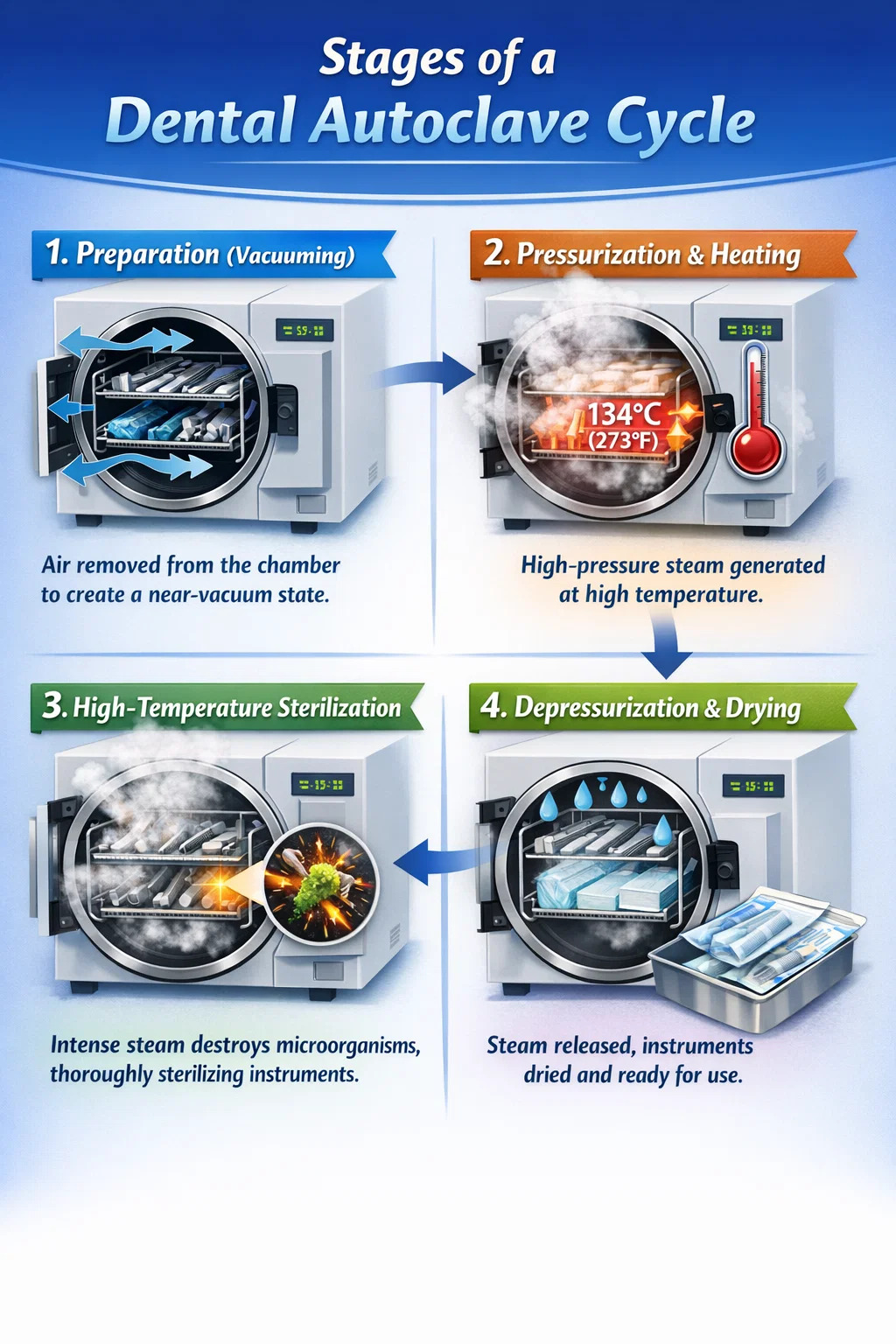
Before the machine starts heating, the most advanced dental autoclaves perform a crucial step – removing the air from the chamber.
Why remove air: If the air is not completely removed, it will act like air bubbles, trapping itself in the crevices or narrow lumens of the instruments, preventing the high-temperature steam from reaching them.
Method: The machine repeatedly performs a "vacuuming-and-refilling" process to ensure a near-vacuum state inside, creating space for the subsequent "complete coverage" by steam.
Once the air is removed, the water inside the machine begins to boil, generating a large amount of saturated steam.
The role of pressure: When cooking at home, water boils at 100 degrees Celsius and the temperature doesn't rise further. However, in the sealed space of a dental autoclave, as more steam is generated, the pressure inside increases significantly.
Achieving high temperature: It is precisely because of this high pressure that the boiling point of water is forcibly raised, resulting in steam temperatures far exceeding that of ordinary boiling water, sufficient to destroy the internal structure of stubborn microorganisms.
Once the pressure and temperature reach the preset optimal levels, the machine enters a stable "holding time."
Deep penetration: Under the impetus of high pressure, the high-temperature steam penetrates like an all-pervasive "fine mist," reaching the deepest parts of dental handpieces, forceps, and various small tubes.
Thorough cleaning: During this time, the high temperature directly denatures the proteins of microorganisms, achieving true sterilization.
Once the sterilization time is complete, the machine begins to slowly release the internal pressure, expelling the steam.
Drying function: To prevent secondary contamination caused by wet instruments upon removal, many dental autoclaves activate the vacuum pump again to remove any remaining moisture. Cooling and removal: Finally, the pressure inside the chamber returns to the same level as the outside, and once the temperature drops slightly, the doctors can retrieve packages of dry, clean instruments.
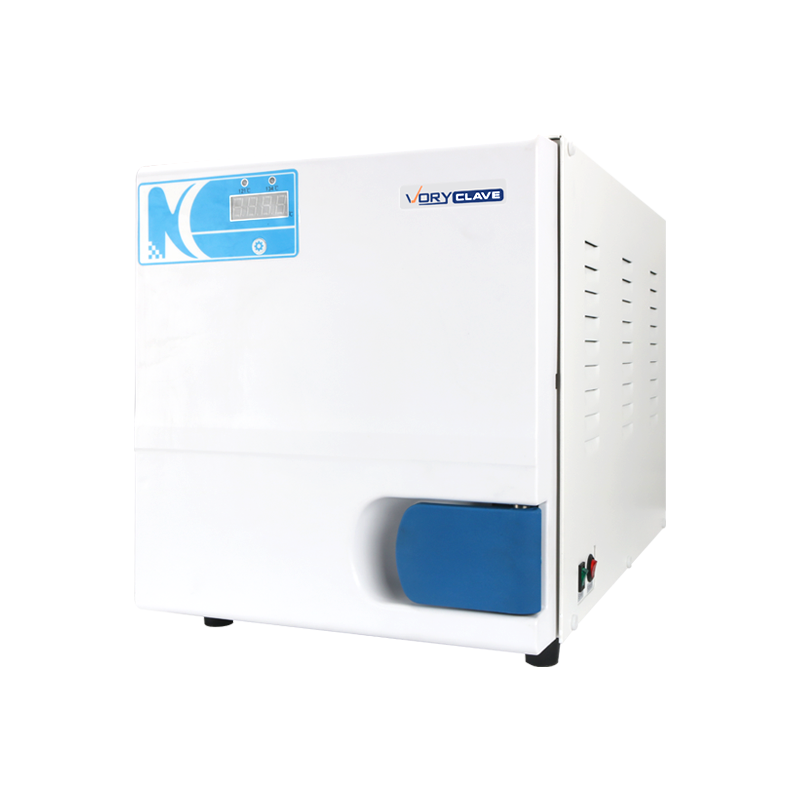
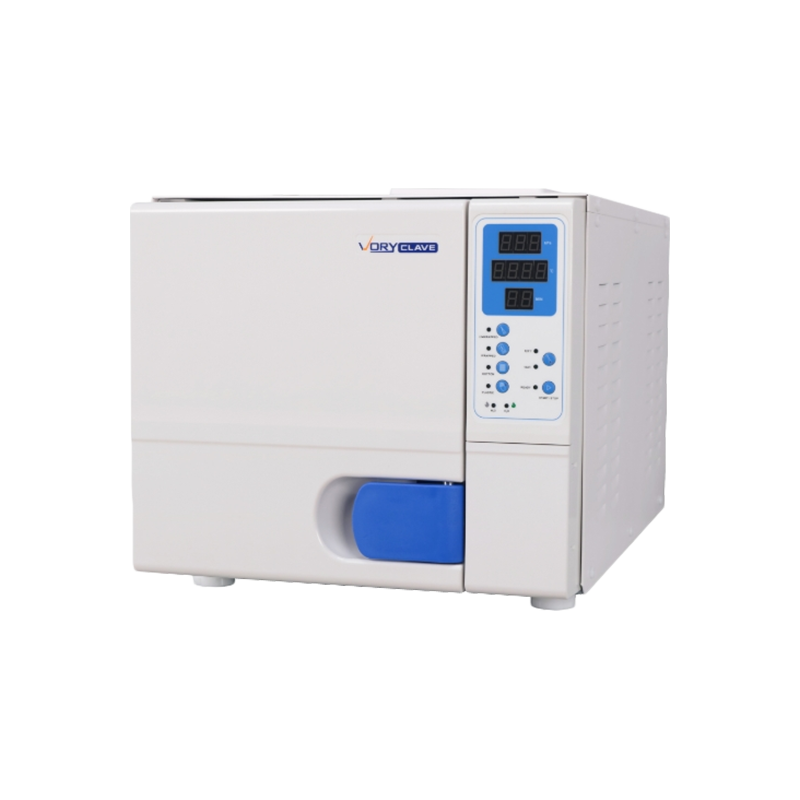
If you have any question for the installation
or need support, please feel free to contact us.
86-15728040705
86-18957491906


