Content
A B type autoclave is the highest-performance class of steam sterilizer defined by the European standard EN 13060. It uses a pre-vacuum cycle — typically a triple fractioned pre-vacuum — to remove air from the chamber before steam is introduced. This means steam penetrates every surface of every instrument, including the narrow lumens of hollow tools, the inner layers of wrapped packs, and the tight folds of porous materials. No other small steam sterilizer class — not N type, not S type — achieves this level of air removal or steam penetration.
The practical consequence is significant: a B type autoclave can sterilize virtually any instrument type approved for steam sterilization. Unwrapped solid instruments, wrapped solid instruments, porous loads, and Type B hollow instruments with a length-to-diameter ratio above 1:750 — all of them. This universality makes the B type the default choice for clinics and facilities that handle complex, mixed instrument sets.
For dental clinics specifically, the class B dental autoclave has become the regulatory and professional standard across Europe and many other regions. EN 13060 was developed with dental practice in mind, and most national dental health authorities in the EU, the UK, Australia, and beyond now mandate or strongly recommend class B sterilization for all reusable dental instruments.
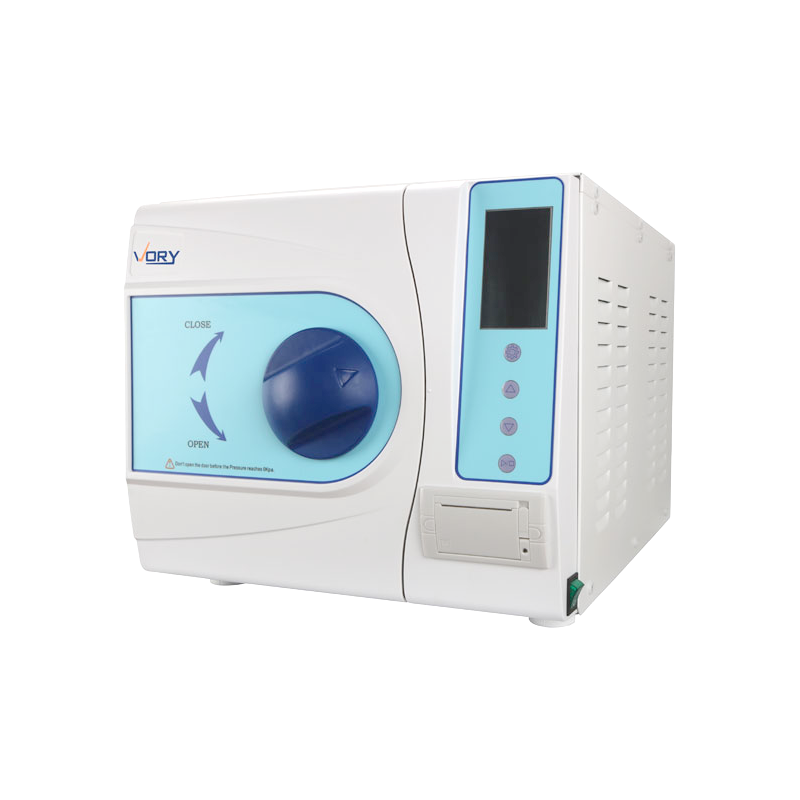
Understanding where the B type sits requires a direct look at all three classes defined under EN 13060. The classification is not a marketing distinction — it reflects fundamentally different sterilization cycle designs and validated performance outcomes.
| Class | Air Removal Method | Wrapped Instruments | Hollow Instruments (Type B) | Porous Loads | Typical Use |
|---|---|---|---|---|---|
| N Type | Gravity displacement | No | No | No | Unwrapped solid instruments only |
| S Type | Manufacturer-specified | Depends on spec | Depends on spec | Depends on spec | Limited, specified loads |
| B Type | Fractioned pre-vacuum | Yes | Yes | Yes | All instrument types |
N type machines — still used in some basic settings — cannot sterilize wrapped instruments because the gravity displacement cycle leaves residual air pockets inside packaging materials. Steam never reaches the surface. An instrument that leaves an N type autoclave in packaging has not been sterilized for storage purposes; it must be used immediately and even then, steam penetration into complex geometries is unreliable.
S type machines sit in the middle. Their performance is validated only for the specific loads listed in the manufacturer's declaration. If your instrument set falls outside that declaration, the S type machine gives you no validated assurance. For facilities with diverse instrument inventories, this creates significant compliance risk.
The B type eliminates ambiguity. Its pre-vacuum cycle — typically performed as three alternating vacuum and steam pulses before the main sterilization hold — creates the thermodynamic conditions for complete steam penetration across all load geometries. This is why many infection control guidelines worldwide now treat the class B dental autoclave as the minimum acceptable standard for dental surgeries.
The internal mechanics of a B type autoclave cycle follow a precise, validated sequence. Each phase serves a specific engineering purpose. Understanding this sequence helps operators recognize deviations, maintain performance, and explain the technology to patients or regulators.
The vacuum pump evacuates the chamber to a target pressure, typically between 50 mbar and 80 mbar. This removes approximately 95% or more of the air present. Steam is then briefly injected, followed by another vacuum pulse. This alternating sequence is repeated — most commonly three times — ensuring that air is displaced from every crevice, lumen, and layer of the load. Without this step, residual air acts as a thermal insulator and physically blocks steam contact with instrument surfaces.
Steam fills the evacuated chamber, rapidly reaching the target sterilization temperature and pressure. Standard cycles operate at 134°C and approximately 2.1 bar for a hold time of 3 to 4 minutes, or at 121°C and approximately 1.05 bar for 15 minutes. The higher-temperature cycle is used for most dental and medical instrument applications. During this phase, the combination of saturated steam, temperature, and time produces the lethal conditions required to achieve a Sterility Assurance Level (SAL) of 10⁻⁶ — meaning the probability of any viable microorganism surviving is less than one in one million.
After sterilization, the chamber is evacuated again. This post-vacuum phase removes residual steam condensate from instrument surfaces and packaging. Proper drying is critical for wrapped instruments intended for storage: moisture inside packaging creates pathways for microbial re-contamination. A well-functioning class B dental autoclave will deliver instruments that are visibly dry and ready for sealed storage as soon as the cycle ends.
Filtered air is admitted to equalize pressure, and the door releases. Many modern B type autoclaves include HEPA-filtered air admission to prevent recontamination during this final step. The door on most units will not open unless drying is confirmed complete and all cycle parameters have been met.
The instrument inventory of a typical dental surgery is among the most demanding of any healthcare setting from a sterilization standpoint. Dental tools are characterized by small diameter lumens, articulating joints, angled tips, and complex surface textures — all features that create challenges for steam penetration.
Consider a standard set of instruments used during a single dental appointment: explorers, periodontal probes, scalers, curettes, extraction forceps, elevators, contra-angle handpieces, and endodontic files. Of these:
Beyond instrument compatibility, wrapped sterilization enables a genuine sterile storage system. Instruments sterilized in a class B dental autoclave and sealed in appropriate packaging maintain sterility for defined shelf-life periods — typically 6 months for paper/film pouches under correct storage conditions, or longer for hard-case cassette systems. This allows clinics to maintain pre-packed, ready-to-use instrument sets, improving workflow efficiency and reducing the risk of last-minute instrument shortages during patient treatment.
From a regulatory perspective, the picture has grown increasingly clear. In Germany, the Robert Koch Institute guidelines (RKI guidelines) specify B type sterilization for dental handpieces. The UK's HTM 01-05 guidance states that for dental practices in England, B type sterilizers are preferred, particularly for wrapped and hollow instruments. France, Italy, Spain, the Netherlands, and most EU member states have aligned with EN 13060 class B as the clinical standard. In Australia, AS/NZS 4815 similarly mandates pre-vacuum sterilization for hollow and wrapped loads in dental settings.
Not all units marketed as B type autoclaves perform equally in real clinical environments. Comparing specifications carefully before purchasing prevents costly mistakes in both compliance and operational efficiency.
Small B type autoclaves for dental use typically range from 8 liters to 22 liters chamber capacity. A single-surgery dental practice processing moderate instrument volumes often manages with an 8 to 12 liter unit. Practices with multiple treatment rooms, high patient throughput, or implant surgery programs benefit significantly from 17 to 22 liter chambers, reducing the number of cycles needed per day and the cumulative wear on the machine.
Total cycle time from door close to door open for a standard B type cycle at 134°C typically ranges from 20 to 35 minutes depending on load type and machine design. Quick cycles for unwrapped instruments may run as short as 12 to 18 minutes on modern units. This is operationally important: a dental surgery running back-to-back appointments every 30 to 45 minutes needs a sterilizer that matches that rhythm. Cycle time is often the single most critical factor in real-world workflow management.
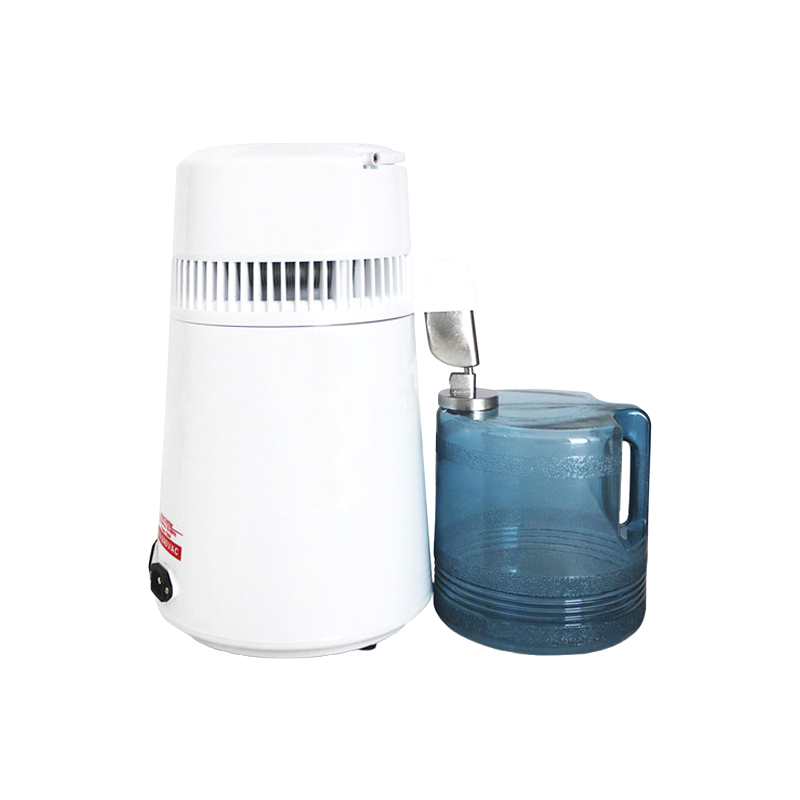
B type autoclaves require water of specific purity for steam generation — typically Type 2 water per ISO 3696, with conductivity below 15 µS/cm. Hard water or tap water causes scale buildup in the steam generator, degrading performance and shortening service life significantly. Units with integrated water treatment systems or built-in demineralizers simplify daily operation. Others require an external reservoir filled with distilled or demineralized water. The water quality requirements should be confirmed and a water supply plan established before installation.
Traceability is a legal and professional requirement in most jurisdictions. A compliant class B dental autoclave must produce a cycle record for every sterilization run, documenting temperature, pressure, time, and pass/fail status. Most modern units offer built-in thermal printers, USB data export, or network connectivity for electronic record keeping. Units with automatic cycle logging to external systems are increasingly preferred as dental practices move toward fully digital compliance workflows.
Larger units — typically 17 liters and above — are available with double-door configurations. One door opens on the "dirty" side where unsterilized instruments are loaded; the other opens on the "clean" side where sterile instruments are removed. This physical separation of clean and dirty zones is a requirement in many hospital and specialty dental clinic decontamination room designs and significantly reduces cross-contamination risk from workflow.
Any compliant B type autoclave includes door-locking mechanisms that prevent opening under pressure, over-temperature cutoffs, steam generator protection against running dry, and fail-safe cycle abort protocols. Look also for chamber material: high-quality units use polished 316L stainless steel for the chamber, which resists corrosion from condensate and chemical residues far better than lower grades.
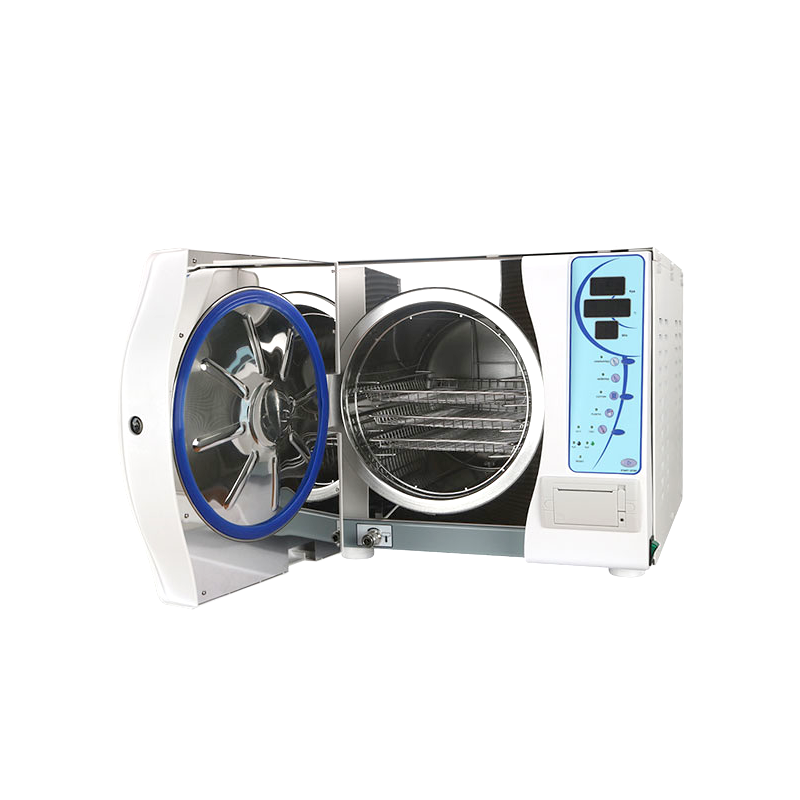
Purchasing a certified B type autoclave is only the starting point. Regulatory frameworks and professional guidelines require ongoing validation and testing to demonstrate that the machine continues to perform within its validated parameters throughout its service life.
The Bowie-Dick test — now more precisely called the air removal and steam penetration test — should be performed every day before the first sterilization cycle. It uses a standardized test pack or a proprietary single-use test sheet placed in the geometric center of an otherwise empty chamber. The test cycle runs, and the indicator pattern on the test sheet reveals whether air removal was uniform and complete. A non-uniform or failed result means the machine must not be used until the cause is identified and corrected.
The helix test uses a hollow tube of defined geometry (1.5 mm internal diameter, 1500 mm length, giving a ratio of 1:1000) with a chemical indicator at the blind end. It simulates the most challenging hollow instrument geometry that a class B dental autoclave must penetrate. If steam reaches and activates the indicator at the closed end, steam penetration performance is confirmed for that load type. This test is typically required at least weekly or whenever hollow instrument loads represent a significant portion of the cycle.
Biological indicators (BIs) use live spores — typically Geobacillus stearothermophilus — as a direct test of sterilization efficacy. After a sterilization cycle, the BI is incubated; no growth confirms the cycle achieved lethal conditions. BIs are typically run weekly or monthly depending on jurisdiction, and always after any maintenance, repair, or significant operational change. They represent the gold standard for sterilization validation because they directly demonstrate kill efficacy rather than proxying it through physical parameters.
Most regulatory frameworks require annual performance qualification of each autoclave by a qualified engineer or service technician. This includes calibration of temperature and pressure sensors, testing of safety systems, assessment of door seals and vacuum system integrity, and documentation of results against the machine's original validation data. Facilities that skip annual qualification risk operating an autoclave that has drifted out of specification without any obvious indication to the user.
Even the best class B dental autoclave fails to deliver sterile instruments if operated incorrectly. These are the most common errors observed in practice audits and infection control inspections.
While the class B dental autoclave dominates discussions in dental infection control, the B type autoclave serves a wide range of healthcare and research environments where complete, validated steam sterilization of complex loads is required.
| Application | Why B Type Is Required | Typical Chamber Size |
|---|---|---|
| General dental surgery | Hollow handpieces, wrapped packs, mixed loads | 8–18 L |
| Oral and maxillofacial surgery | Implant components, surgical trays, drapes | 18–22 L |
| GP and primary care clinics | Reusable minor surgery instruments, speculums, scopes | 8–22 L |
| Podiatry | Hollow-handled instruments, wrapped sets | 8–12 L |
| Veterinary practice | Surgical instruments of varying geometry, wrapped storage | 12–22 L |
| Microbiology laboratory | Porous media, culture flasks, complex glassware assemblies | 18–50 L |
In laboratory settings, B type autoclaves are used for sterilizing growth media in bottles with tight closures — a challenge for gravity displacement because steam cannot displace the trapped air inside sealed or partially sealed containers. The pre-vacuum cycle solves this by first pulling air from the liquid headspace before admitting steam.
Installing a B type autoclave involves more planning than simply finding counter space. The vacuum system, water supply requirements, drainage, electrical load, and ventilation all need to be addressed before the unit arrives.
Small B type autoclaves (8–12 L) typically operate on standard single-phase 230V supply at 10–16A. Larger units (17–22 L) often require a dedicated 16A or 32A circuit. The steam generator element and vacuum pump draw significant startup current; using an undersized circuit breaker causes nuisance tripping and accelerates electrical component wear.
Units with integrated water feed require connection to mains supply plus a water treatment system — typically a reverse osmosis or mixed-bed deionizer unit — to achieve the required water quality. Effluent must be routed to a drain that can handle the temperature of discharged condensate (typically 60–80°C at point of discharge). Some units include heat exchangers to cool effluent before drainage; check local building regulations regarding discharge temperature limits.
B type autoclaves exhaust steam during the drying phase. A decontamination room with poor ventilation accumulates heat and humidity rapidly during a busy processing schedule. Adequate air exchange — typically a minimum of 10 air changes per hour recommended for dental decontamination rooms — prevents the working environment from becoming uncomfortable and protects the autoclave's own electronics from heat stress.
Best practice for dental and primary care decontamination rooms specifies a one-way workflow: instruments enter on the dirty side (receiving, cleaning, inspection), move through the autoclave, and exit on the clean side (storage, dispatch). Even in small practices where a separate room is not possible, a clear physical distinction between the dirty zone and clean storage area reduces cross-contamination risk. The class B dental autoclave with a double door is the ideal solution when physical separation of the two zones is achievable.
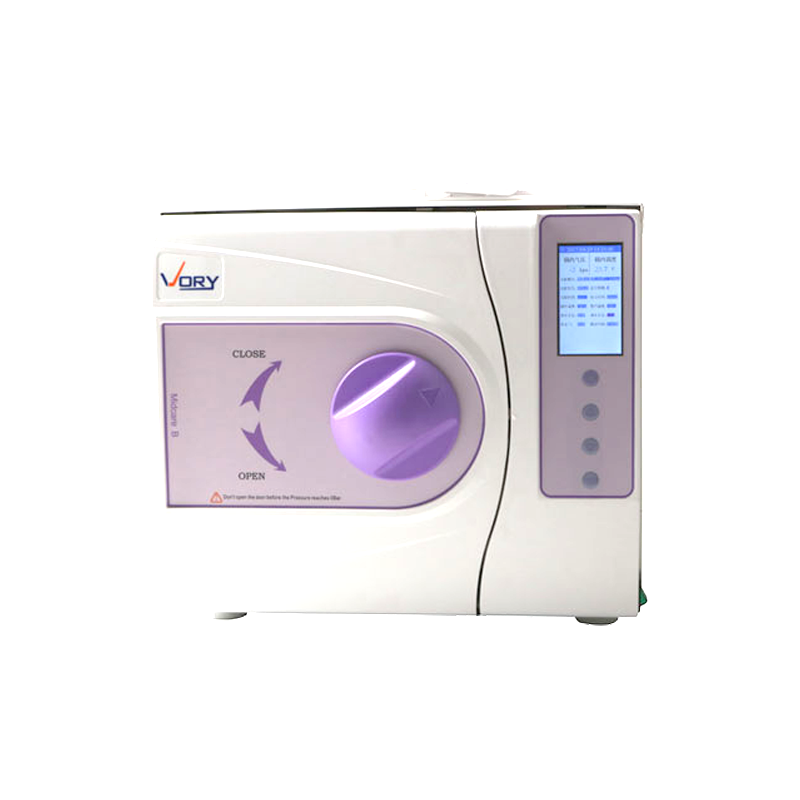
A well-maintained B type autoclave has an expected service life of 8 to 15 years, depending on usage intensity, water quality management, and the quality of routine maintenance. High-volume practices running 20 or more cycles per day will approach the lower end of this range; lower-volume settings may far exceed it.
Key indicators that a unit is approaching end of useful life or requires serious evaluation:
From a regulatory perspective, operating an autoclave that cannot be reliably validated is a risk that no practice should accept. Modern class B dental autoclave units offer significantly improved connectivity, cycle logging, and user interface features compared to units produced even 10 years ago. The upgrade investment is often justified on compliance and operational efficiency grounds alone, independent of whether the old unit still functions.
For simple solid instruments used immediately after sterilization, an N type cycle technically achieves sterilization of accessible surfaces. However, most current dental infection control guidelines now require B type sterilization even for solid instruments because instruments are typically packaged for storage. An N type machine cannot validate sterility for packaged items, and the practical need to wrap instruments for storage means an N type autoclave creates a compliance gap in most contemporary dental workflows. Many regulators have moved to treating B type as the minimum standard regardless of instrument complexity.
No. In the EN 13060 standard, the letters N, S, and B are not acronyms or quality rankings — they are arbitrary classification designators. B type simply identifies the highest-performance class defined by that standard, characterized by the fractioned pre-vacuum cycle. The "B" itself carries no literal meaning beyond its function as a class label within the standard.
Most manufacturers recommend a full preventive maintenance service every 12 months or after a specified number of cycles — typically 2,000 to 3,000 cycles, whichever comes first. High-volume practices may reach the cycle threshold before 12 months. In addition to annual service, operators should perform daily checks (Bowie-Dick test, water level, visual inspection), weekly tests (helix test, biological indicator if required), and regular filter changes and drain cleaning according to the manufacturer's maintenance schedule.
The pre-vacuum principle is the same, but the scale and standard differ. B type autoclaves under EN 13060 are small steam sterilizers with chambers up to 60 liters. Large steam sterilizers used in hospital CSSD (Central Sterile Supply Department) environments are governed by EN 285, which applies to chamber volumes above 60 liters. EN 285 sterilizers use the same fractioned pre-vacuum approach but must meet additional validation requirements reflecting their larger load capacities and the higher throughput demands of hospital sterilization departments. The two standards are aligned in principle but involve different test procedures, load configurations, and qualification protocols.
Not necessarily. "Class B" as a marketing label appears on some units that may not carry full EN 13060 type approval or CE marking with full conformity documentation. When evaluating any class B dental autoclave, buyers should request the Declaration of Conformity confirming EN 13060 compliance, CE marking documentation, and type test certification from an accredited notified body. Units sold without this documentation may not perform to the standard they claim, particularly with regard to hollow instrument penetration and wrapped load sterilization — the very capabilities that define class B performance.
If you have any question for the installation
or need support, please feel free to contact us.
86-15728040705
86-18957491906

 English
 عربى
عربى

