Content
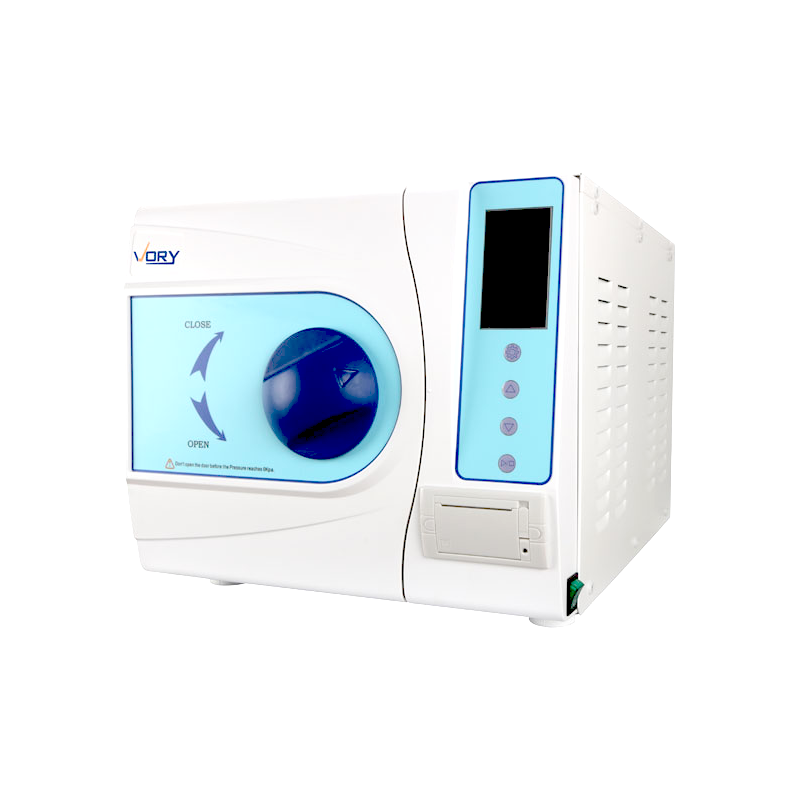
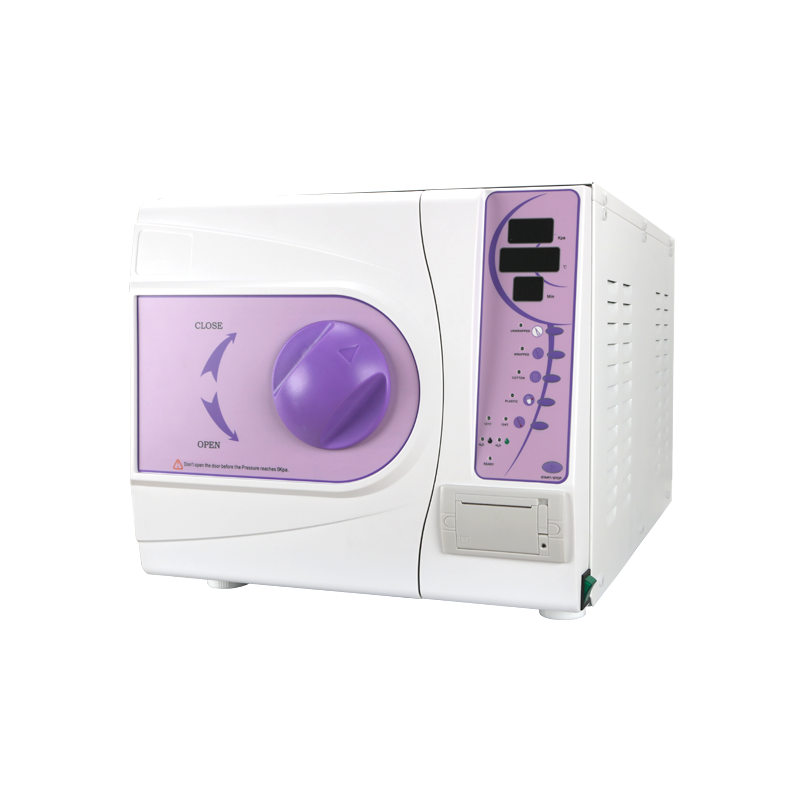
An S type autoclave is a steam sterilizer specifically engineered for solid, non-porous instruments — it does not use a pre-vacuum or post-vacuum cycle and is therefore unsuitable for porous loads, hollow instruments, or wrapped sets. In dental and medical settings, choosing the wrong autoclave class leads directly to sterilization failures, regulatory non-compliance, and patient safety risks. If your practice handles only solid, unwrapped metal instruments and the device will never process textiles, pouches, or tubular handpieces, an S type unit can be a cost-effective and efficient solution. If not, you need a Class B dental autoclave.
The classification system — Class N, Class S, and Class B — comes from the European standard EN 13060, which defines performance requirements for small steam sterilizers used in healthcare. Understanding exactly where the S type sits within this framework prevents expensive procurement mistakes and, more critically, protects patients from inadequately sterilized instruments.
The European standard EN 13060 divides small steam sterilizers into three classes based on the type of load they can safely sterilize. Each class has mandatory test cycles that must pass before a device can carry the designation.
Class N autoclaves handle only unwrapped, solid instruments. No pouches, no textiles, no hollow bodies. These are entry-level units, often found in small clinics that process a narrow instrument range. They are the most restrictive and the least suitable for full-service dental autoclave needs.
The S type autoclave handles a load range that the manufacturer specifies — hence the "S" for "specified." This is the key distinction: the manufacturer defines what the unit can and cannot sterilize, and these specifications must be declared in the product documentation. Depending on the design, some S type autoclaves can process single-wrapped instruments or certain simple hollow items, but only if the manufacturer has validated and declared this capability. An S type dental autoclave cannot be assumed to match Class B capability unless the manufacturer explicitly validates it for that load type.
Class B is the gold standard for dental autoclave sterilization. It uses a fractionated pre-vacuum cycle to remove air from porous loads, hollow instruments (including dental handpieces), and wrapped sets. Any dental practice that processes a full range of instruments — particularly turbines, contra-angles, and surgical tools — requires a Class B sterilizer. This is mandatory in most EU member states for practices using hollow or wrapped instruments.
| Class | Solid Unwrapped | Wrapped / Pouched | Hollow Instruments | Porous / Textile Loads |
|---|---|---|---|---|
| Class N | YES | NO | NO | NO |
| Class S | YES | Manufacturer-specified | Manufacturer-specified | Manufacturer-specified |
| Class B | YES | YES | YES | YES |
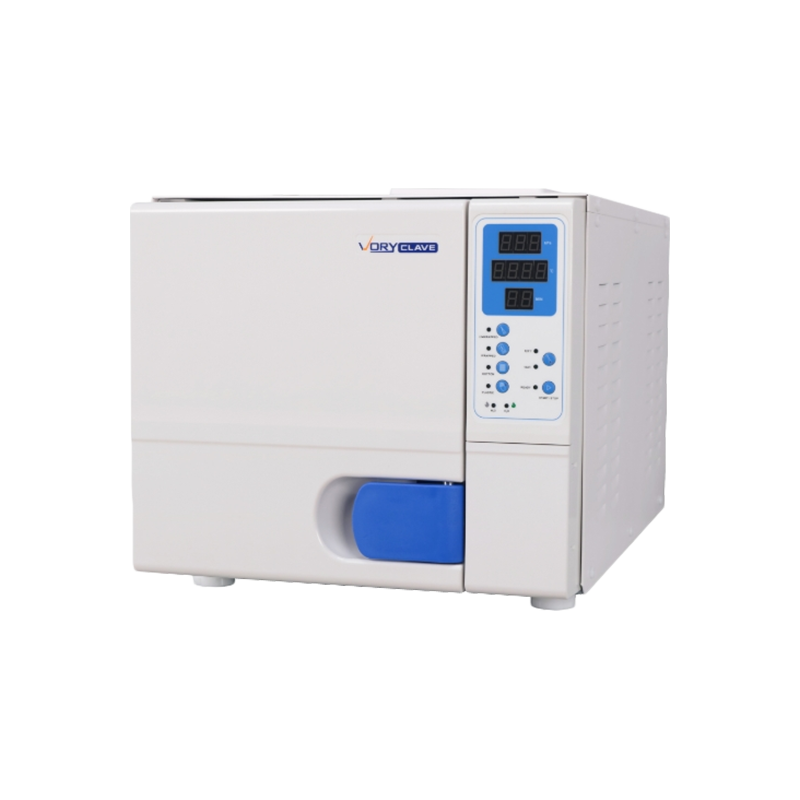
Unlike Class B sterilizers, which use fractionated pre-vacuum cycles to force steam into every cavity and pore, an S type autoclave typically relies on gravity displacement or a single steam pulse to displace air from the chamber. This works reliably for solid, non-porous instruments where steam does not need to penetrate into cavities or packaging layers.
A standard S type autoclave sterilization cycle includes the following stages:
The absence of fractionated pre-vacuum means residual air pockets can remain in hollow lumens or wrapped packs during an S type cycle. This is why the classification system exists — to prevent practitioners from assuming all autoclaves are interchangeable when they are not.
The practical differences between an S type and a Class B dental autoclave affect daily workflow, instrument selection, regulatory compliance, and patient risk. Here is a direct comparison of the most operationally relevant factors:
Dental turbines, contra-angles, and air motors are hollow instruments with internal channels. An S type autoclave cannot reliably sterilize these items unless the manufacturer has explicitly validated and declared the unit for hollow instrument loads. A Class B dental autoclave, by definition, can process hollow instruments using fractionated pre-vacuum cycles. For any practice routinely sterilizing handpieces, the Class B designation is not optional.
Sterilization pouches allow instruments to remain sterile during storage — a critical requirement for maintaining sterility until point of use. A Class B dental autoclave can sterilize single-wrapped and double-wrapped instrument sets. Many S type units cannot. Without pouching capability, instruments must be used immediately after sterilization or risk recontamination from the environment during storage. For practices that prepare instrument trays in advance, this is a significant workflow constraint.
S type autoclaves often complete cycles faster than Class B units — partly because they skip fractionated pre-vacuum stages. For a busy single-chair practice handling only solid metal instruments, this speed advantage is real. Some S type dental autoclave models complete a 134°C cycle in under 15 minutes total. Class B cycles typically run 25–40 minutes when factoring in pre-vacuum, sterilization hold, and active drying.
Regulatory requirements in the EU, UK, and many other jurisdictions require that sterilization cycles be documented with printed or electronic records for each batch. Both Class S and Class B dental autoclaves must comply with this requirement. However, Class B units typically come with more advanced integrated printers and batch traceability systems as standard features, because the range of loads they handle demands stricter documentation protocols.
| Feature | S Type Autoclave | Class B Dental Autoclave |
|---|---|---|
| Solid instruments (unwrapped) | YES | YES |
| Pouched / wrapped instruments | Varies by model | YES |
| Dental handpieces | Usually not validated | YES |
| Porous / textile loads | Usually not validated | YES |
| Typical cycle time (134°C) | 10–20 minutes | 25–40 minutes |
| Cost (entry level) | Lower | Higher |
| Air removal method | Gravity / single pulse | Fractionated pre-vacuum |
Regulatory guidance across Europe, the UK, and internationally varies in how strictly it mandates Class B over S type autoclaves for dental use. Understanding the regulatory landscape in your region is essential before making a purchase decision.
In most EU member states, national dental guidelines and infection control standards explicitly require Class B dental autoclaves for practices that process hollow instruments or wrapped sets. Germany's KRINKO guidelines, the UK's HTM 01-05 (Health Technical Memorandum), and France's ADF recommendations all specify that Class B sterilization is the minimum standard for practices processing critical instruments such as surgical instruments, scalers, and handpieces. The HTM 01-05 in the UK differentiates between "essential quality requirements" and "best practice," with Class B sterilization listed as best practice for all instrument types.
An S type dental autoclave may be acceptable under some national frameworks for specific instrument categories — but only when the practice scope is narrow, load types are confirmed as within the manufacturer's validated range, and documentation supports compliance. Using an S type unit as if it were Class B equivalent is not defensible under inspection.
EN 13060 requires that both S type and Class B autoclaves undergo performance qualification testing. For an S type dental autoclave, this means:
Annual periodic testing is required in most jurisdictions. Batch records must be retained for a minimum period — typically two to five years depending on local requirements — and must be available for inspection by regulatory authorities or infection control auditors.
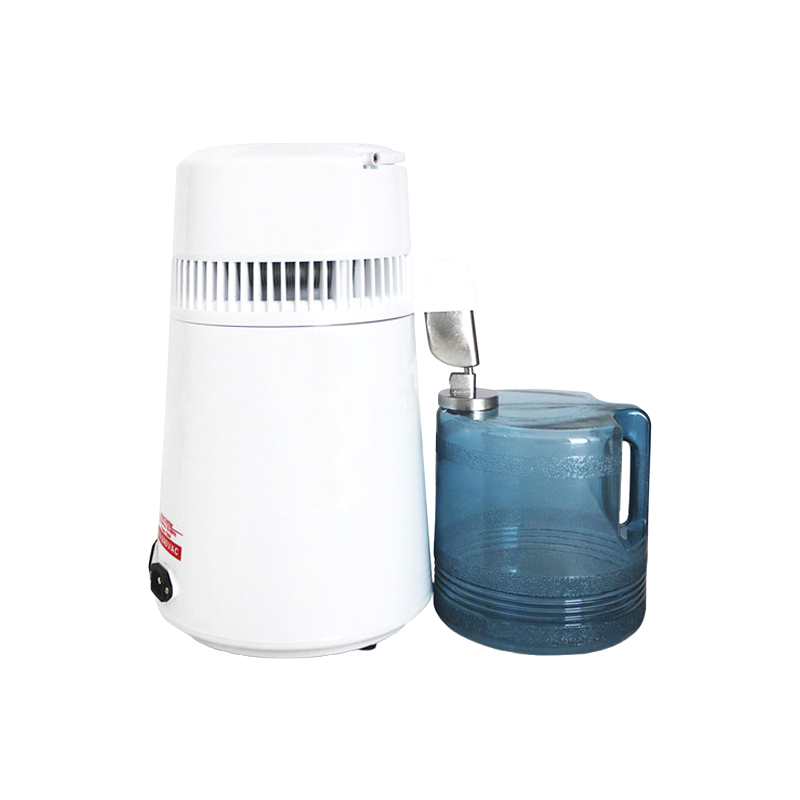
Both S type and Class B dental autoclaves require distilled or deionized water to generate steam. Tap water contains minerals that accumulate as scale inside the chamber, heating elements, and steam generator, accelerating corrosion and reducing sterilization efficiency. EN 13060 references EN 285 for water quality standards, specifying that water used for steam generation must have a conductivity below 15 µS/cm and a pH between 5 and 7. Using non-compliant water voids manufacturer warranties and increases maintenance costs significantly.
If your practice scope genuinely aligns with an S type dental autoclave's validated load range, there are specific technical factors to evaluate before purchasing. Not all S type units are equivalent — manufacturer design decisions significantly affect real-world performance.
Dental autoclave chamber sizes are measured in liters. Most benchtop S type units range from 8 liters to 22 liters. For a single-chair practice running one or two sterilization cycles per morning session, an 8–12 liter unit is typically sufficient. Practices with higher instrument throughput need to calculate the number of daily cycles against the chamber volume to avoid bottlenecks. Overfilling a sterilization chamber is a common cause of cycle failure — instruments must not touch the chamber walls or overlap in ways that prevent steam contact on all surfaces.
Wet instruments at the end of a sterilization cycle are a recontamination risk — moisture supports microbial growth, and wet packaging loses its barrier properties. Some S type dental autoclave models include active drying phases using heated air circulation or vacuum-assisted drying. Others rely on residual heat alone. If your workflow requires storing instruments in pouches for later use, active drying capability is important even for Class S units that support pouching. Verify drying performance data in the manufacturer's technical documentation, not just marketing materials.
Modern S type autoclaves should include a digital control panel with cycle parameter display and a built-in printer or USB/Ethernet data output for batch records. Look for units that log temperature, pressure, and time throughout the entire cycle — not just the sterilization hold — and that generate printed batch records showing the instrument set, date, time, cycle parameters, and a pass/fail result. Some units offer connectivity to practice management software for integrated sterilization records.
The manufacturer's Instructions For Use (IFU) for any S type dental autoclave must explicitly state which load types the unit is validated to sterilize. This is a regulatory requirement under EN 13060 and the EU Medical Device Regulation (MDR 2017/745). If the IFU does not specifically list a load type, the autoclave is not validated for that load — regardless of what a salesperson says. Before purchase, request the IFU and review the declared load types against your actual instrument inventory.
An autoclave that is out of service halts patient care. Evaluate the manufacturer's service network — response time commitments, availability of spare parts, and the frequency of scheduled maintenance intervals. Most S type dental autoclave manufacturers recommend annual preventive maintenance including door gasket inspection and replacement, filter cleaning or replacement, water reservoir descaling, and calibration verification. Confirm that trained service technicians are accessible in your area before committing to a brand.
Even when the correct autoclave class has been selected, operational errors during daily use undermine sterilization reliability. These are the most frequently observed problems in dental practices using S type or Class S dental autoclaves:
Despite the limitations relative to Class B dental autoclaves, there are genuine scenarios where an S type unit is the appropriate and compliant choice:
The fundamental question is not which class is "better" in the abstract, but whether the declared load types of the specific S type autoclave model match the actual instruments used in your facility. This match must be documented and defensible.
A systematic maintenance schedule extends the service life of an S type dental autoclave, prevents cycle failures, and supports regulatory compliance. The following schedule reflects manufacturer recommendations across most major brands:
High-throughput practices running 8–12 cycles per day will need more frequent gasket and filter replacements than low-volume users. Tracking cumulative cycle counts — which most modern S type dental autoclave control systems log automatically — helps predict component replacement intervals accurately rather than relying only on time-based schedules.
EN 13060 lays out specific test procedures that an S type autoclave must pass during type testing (manufacturer certification) and periodic testing in the field. Understanding these requirements helps practitioners verify that their unit and their service provider are genuinely meeting the standard.
For S type autoclaves that declare capability for porous or single-wrapped loads, a steam penetration test using a standardized test pack or process challenge device (PCD) is required. The PCD simulates the most challenging load the unit is declared to process. For units limited to solid unwrapped instruments, this test may not apply — but this must be explicitly confirmed against the unit's IFU.
Some S type dental autoclave models include an air detector that triggers an abort if air pockets above a threshold concentration remain in the chamber during the cycle. This is a safety feature that prevents the unit from completing a cycle that would not achieve sterilization. Annual verification that this detector functions correctly within specified limits is part of performance qualification for applicable models.
A thermocouple mapping test places multiple temperature probes at defined positions throughout the loaded chamber to verify that every point reaches and maintains the target sterilization temperature throughout the hold time. EN 13060 requires that temperature variation across the chamber during the sterilization hold does not exceed ±2°C from the reference temperature. Thermocouples outside this band indicate cold spots where sterilization conditions have not been met.
If you have any question for the installation
or need support, please feel free to contact us.
86-15728040705
86-18957491906

 English
 عربى
عربى

