Content
If you have spent any time researching water purification, you have probably encountered reverse osmosis filters, activated carbon blocks, UV sterilizers, and ceramic filters. They all promise clean water. Some of them do a decent job at removing specific contaminants. But none of them come close to what a water distiller actually does. When people say water distilling is the only way to really go right, they are not being dramatic. They are describing a physical process that mimics the hydrological cycle and leaves virtually nothing behind except H₂O molecules.
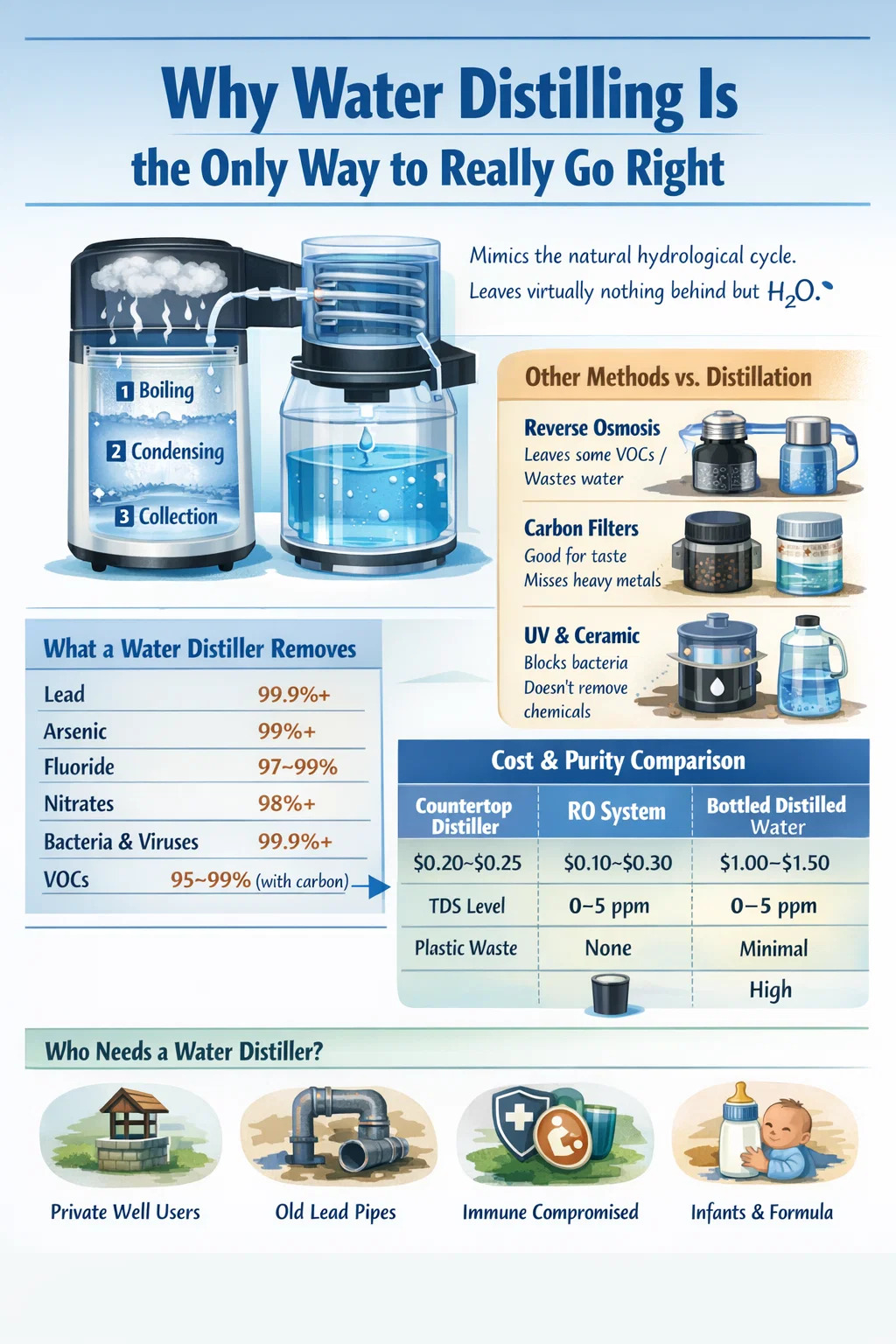
The core principle is simple: water is heated to boiling, the steam rises and travels through a cooling coil, and it condenses back into liquid water in a clean collection container. Anything that cannot evaporate with the steam stays behind. That means heavy metals, dissolved salts, bacteria, viruses, cysts, nitrates, fluoride, chlorine byproducts, and most volatile organic compounds are left in the boiling chamber as residue. What you collect is as close to pure water as you can produce at home or in a small commercial setting.
Other filtration methods are selective. They target certain contaminants but let others pass through. A carbon filter removes chlorine taste beautifully but does almost nothing about dissolved lead or nitrates. Reverse osmosis removes a broad range of contaminants but struggles with certain volatile organic compounds that evaporate right along with the water vapor during membrane pressure. A water distiller does not discriminate. The process itself is the mechanism, and the physics does not make exceptions based on contaminant type.
The removal rates achieved by a quality water distiller are not marketing claims. They are measurable, repeatable, and verifiable with a basic TDS (total dissolved solids) meter. Tap water in many US cities runs between 150 and 400 ppm TDS. After running through a countertop water distiller, that number drops to between 0 and 5 ppm. That is a reduction of over 98% in dissolved solids with a single pass.
| Contaminant | Typical Removal Rate | Notes |
|---|---|---|
| Lead | 99.9%+ | Does not evaporate; stays in boiling chamber |
| Arsenic | 99%+ | High boiling point; left behind as residue |
| Fluoride | 97–99% | One of the few methods proven effective against fluoride |
| Nitrates | 98%+ | Critical for infant safety; RO is less reliable here |
| Bacteria & Viruses | 99.9%+ | Boiling temperature kills all known pathogens |
| Chloramine | 95–99% | Carbon post-filter handles any remaining trace amounts |
| VOCs (e.g. benzene) | 95–99% (with carbon) | Carbon post-filter is essential for full VOC removal |
| Heavy metals (general) | 99%+ | Mercury, cadmium, chromium all left in residue |
The one category where water distillers need a little help is volatile organic compounds. Substances like benzene or chloroform have lower boiling points than water, so they can potentially travel with the steam. This is exactly why most well-designed water distillers include a small activated carbon post-filter. The combination of distillation and carbon post-filtration covers essentially every contaminant category known to appear in municipal or well water supplies. No single-stage filtration system can say the same.
It is worth going through the alternatives systematically, because each has real strengths that deserve acknowledgment. But understanding their limits is just as important as understanding their strengths.
Reverse osmosis (RO) forces water through a semipermeable membrane under pressure. It removes a wide range of contaminants and produces reasonably pure water — TDS levels typically land between 10 and 50 ppm depending on the membrane quality and feed water. However, RO systems have several practical weaknesses. The membranes have a finite lifespan and must be replaced every two to three years at a cost of $50 to $200 depending on the system. They also waste a significant volume of water in the process — most RO units discharge two to four gallons of waste water for every gallon of purified output. On hard water, the membranes foul faster. And RO does not remove certain volatile compounds or some pesticides as reliably as distillation does.
Carbon filtration is excellent for improving taste and odor. It handles chlorine, some chloramines, and a range of organic compounds effectively. But it does virtually nothing against dissolved minerals, heavy metals, nitrates, fluoride, or biological contaminants unless paired with other stages. A carbon-only filter is essentially a taste improvement device, not a purification device. Using one as a standalone solution in an area with lead pipes or agricultural runoff is not adequate.
Ultraviolet light is highly effective at neutralizing bacteria, viruses, and other biological organisms. It is widely used in both residential and industrial settings. The problem is that UV does exactly nothing about dissolved chemical contaminants. Lead, arsenic, fluoride, nitrates, and heavy metals are completely unaffected by UV exposure. A UV system paired with a pre-filter handles biological risk but leaves the chemical picture unaddressed.
Ceramic filters with small enough pore sizes can physically block protozoa and bacteria, and some include impregnated silver to prevent bacterial growth within the filter medium. They are useful in emergency or off-grid contexts. But again, dissolved solids pass right through. Berkey-style gravity filters with added fluoride reduction elements come closer to comprehensive coverage, but independent lab testing of these systems has sometimes shown inconsistent fluoride removal rates — occasionally as low as 60–70% — which is well below the 97–99% a water distiller reliably achieves.
The pattern is consistent: every alternative method is selective. A water distiller is comprehensive. That is the practical meaning behind saying water distilling is the only way to really go right.
Not every water distiller is the same. The technology comes in several configurations, each suited to different use cases, volume requirements, and budgets.
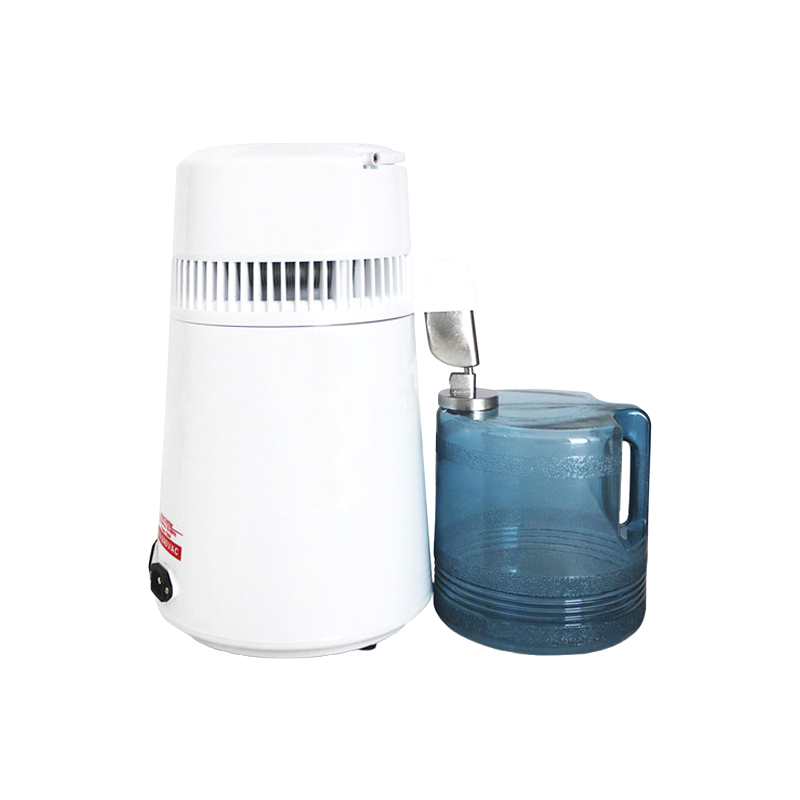
This is the most common type for residential use. A countertop water distiller typically holds one gallon of water in the boiling chamber, runs for about four to six hours on a standard 110V outlet, and delivers roughly one gallon of distilled water per cycle. Power consumption runs between 800 and 1,000 watts during operation. Popular models from brands like Megahome, Pure Water, and H2O Labs are priced between $150 and $400. For a household of one to four people who want distilled water for drinking and cooking, a countertop unit handles the demand comfortably with one or two daily cycles.
Some countertop models connect directly to a water line and automatically refill and restart cycles without manual intervention. These are convenient for households with higher daily demand and remove the need to manually pour water into the boiling chamber before each cycle. They cost more — typically $400 to $700 — but reduce the daily effort significantly.
For homes that want distilled water on demand at a dedicated tap, under-counter systems are available. These are plumbed into the water line, distill continuously or on-demand into a holding tank, and deliver through a separate faucet. Capacity ranges from two to eight gallons per day depending on the model. Installation is more involved and costs more upfront — typically $600 to $1,500 — but the convenience is substantially higher. These systems suit families of four or more, or households that use distilled water for cooking, baby formula, pets, and humidifiers in addition to drinking.
Commercial water distillers produce anywhere from five to over one hundred gallons per day. They are used in laboratories, medical facilities, dental offices, small breweries, and food production environments where water purity directly affects product quality or safety. These units are substantially larger, require 220V power or dedicated circuits, and are priced from $1,500 to well over $10,000. For most households, they are overkill — but they demonstrate that the distillation principle scales effectively across a wide range of applications.
One of the most common objections to choosing a water distiller is the operating cost. Let's look at this honestly with actual numbers rather than vague concerns.
A standard countertop water distiller uses approximately 1 kWh of electricity per gallon of distilled water produced. At the US average electricity rate of around $0.16 per kWh, that comes to roughly $0.16 per gallon of distilled water. Add in the cost of replacement carbon post-filters — usually $10 to $20 per pack, used at a rate of about one filter per 200 gallons — and the total cost per gallon is approximately $0.20 to $0.25.
Compare that to buying bottled distilled water at the store, which typically costs $1.00 to $1.50 per gallon, and the math strongly favors running your own unit. A household using two gallons of distilled water per day would spend about $150 per year running a countertop distiller (electricity + filters), versus $730 to $1,095 per year buying bottled. The unit pays for itself within six months to a year in most cases.
| Cost Category | Countertop Distiller | RO System | Bottled Distilled Water |
|---|---|---|---|
| Upfront cost | $150–$400 | $200–$600 | $0 |
| Cost per gallon (ongoing) | ~$0.20–$0.25 | ~$0.10–$0.30 | $1.00–$1.50 |
| Annual cost (2 gal/day) | ~$150–$180 | ~$120–$220 + membrane | $730–$1,095 |
| Purity level (TDS ppm) | 0–5 ppm | 10–50 ppm | 0–5 ppm (varies by brand) |
| Plastic waste | None | Minimal | High (1 jug per gallon) |
While anyone who drinks tap water can benefit from a water distiller, certain situations make the need more pressing and the argument for distillation more clear-cut.
Private well water is not regulated by the EPA's Safe Drinking Water Act. The responsibility for testing and treating well water falls entirely on the homeowner. Well water can contain arsenic, nitrates, coliform bacteria, manganese, iron, and radon — all of which vary by geography and can change seasonally. A water distiller handles all of these without needing to know exactly which contaminants are present. You do not need to customize the system for your specific water chemistry; the distillation process handles the full spectrum by default.
An estimated 9.2 million homes in the United States still have lead service lines connecting to the municipal water supply, according to EPA data. Even if the municipal water itself tests below action levels, lead can leach from pipes and fixtures inside the home. There is no safe level of lead exposure for children. A water distiller removes over 99.9% of lead, making it the most reliable protection in homes where pipe replacement is not yet complete.
People undergoing chemotherapy, organ transplant recipients, individuals with HIV/AIDS, and elderly individuals with compromised immune systems face heightened risk from waterborne pathogens that healthy adults would fight off easily. Cryptosporidium and Giardia cysts, for example, are resistant to standard chlorination. A water distiller's boiling stage kills all known pathogens without exception, making it the gold standard for this population.
Infants under six months are particularly vulnerable to nitrates in drinking water, which can cause methemoglobinemia (blue baby syndrome). The EPA maximum contaminant level for nitrates is 10 mg/L, but many rural and agricultural areas regularly exceed this in well water. Distilled water for formula preparation eliminates this risk entirely. It also avoids unnecessary fluoride exposure during early tooth development, a topic on which pediatric guidance continues to evolve.
Flint, Michigan brought national attention to lead contamination, but similar events — involving PFAS, TCE, arsenic, or agricultural runoff — occur with some regularity across the country. The EPA's Unregulated Contaminant Monitoring Rule tracks substances not yet subject to federal limits, and the list grows regularly. A water distiller is not limited to removing contaminants that have regulatory limits. It removes anything that cannot evaporate with steam. That includes emerging contaminants that regulators have not yet gotten around to setting limits for.
A few arguments come up repeatedly when water distillers are discussed. Most of them dissolve quickly when examined with specific information rather than generalities.
This claim is often repeated but is not supported by clinical evidence. The premise is that because distilled water has very low mineral content, it will draw minerals from the body to reach equilibrium. In reality, the digestive system and kidneys do not work this way. Water is absorbed in the intestine and the body's mineral regulation occurs through enzymatic and hormonal processes, not passive osmosis from drinking water. The World Health Organization reviewed this question and concluded that while very low-mineral water may theoretically present concerns under very specific conditions of high intake and poor diet, normal dietary intake of minerals through food is far more significant than what is dissolved in drinking water. Most people get less than 10% of their daily calcium and magnesium from water even when drinking mineral-rich tap water.
This is a legitimate sensory observation rather than a health concern. Water's taste comes significantly from dissolved minerals, particularly calcium and magnesium bicarbonate. Distilled water lacks these and does taste noticeably different — some describe it as flat or slightly hollow. If taste is important to you, adding a small pinch of mineral-rich sea salt per gallon, or using a remineralizing filter after distillation, adds back a trace of electrolytes without compromising purity significantly. Many people adapt quickly to the taste and prefer it within a week or two.
As shown in the cost table above, electricity costs approximately $0.16 per gallon at average US rates. For a household drinking two gallons per day, that is around $117 per year in electricity — the cost of about 80 gallons of store-bought distilled water. The energy use is real but the financial argument against it falls apart quickly when compared to the alternatives.
A countertop unit producing one gallon every four to six hours does require planning ahead. The practical solution is straightforward: run the unit overnight and you wake up to a gallon of distilled water with no interruption to your day. For higher-demand households, running two cycles per day or investing in an automatic plumbed-in unit eliminates this concern. Speed is an operational adjustment, not a fundamental flaw in the technology.
One of the advantages of a water distiller over a membrane-based system is that maintenance is straightforward and inexpensive. There are no membranes to replace, no pressurized housings to deal with, and no complex multi-stage cartridge systems. The main maintenance tasks are:
Total annual maintenance time for a countertop water distiller is realistically under three hours. Total annual maintenance cost for filters and citric acid is typically under $30. By comparison, a reverse osmosis system requires annual filter replacements across multiple stages, membrane replacement every two to three years, and occasional sanitization of the holding tank — a more involved and expensive maintenance routine.
Once you have a water distiller running at home, the volume of distilled water available opens up applications beyond drinking that most people do not initially consider.
Each additional use increases the effective value of the electricity and time invested in running the unit, further strengthening the economic case for owning a water distiller outright.
The market for home water distillers is not as crowded as the general water filter market, which makes the decision somewhat simpler. Here is what actually matters when evaluating a unit:
The boiling chamber, steam path, and collection components should be food-grade stainless steel. Avoid units with plastic boiling chambers. When water is heated to near-boiling temperatures, plastic materials can leach compounds into the steam or the distilled water. All reputable water distillers — Megahome, H2O Labs, Pure Water, Waterwise — use stainless steel construction for all surfaces that contact water or steam.
As discussed earlier, a carbon post-filter is essential for full VOC coverage. Any unit worth buying includes one in the nozzle or outlet. Check that replacement filters are readily available and reasonably priced before committing to a particular model.
All modern countertop units shut off automatically when the distillation cycle is complete. This is a basic safety feature that also enables overnight operation without supervision. Do not consider any unit that lacks this feature.
Some units include a glass collection carafe, others use BPA-free plastic. Glass is strongly preferable. If a unit comes with a plastic carafe, replace it with a glass container of the same volume. This is a minor investment that ensures the purity of the distilled water is maintained through the collection and storage stage.
Most one-gallon countertop units run at 800–1,000 watts and complete a cycle in four to six hours. Higher wattage reduces cycle time but increases energy cost per cycle marginally. For most households, the standard 800W units strike the right balance between cycle speed and electricity consumption.
The best water distiller is one you will actually use consistently. A well-reviewed $200 countertop unit that runs every day delivers far more value than a $600 under-counter system that you forget to maintain. Start with a countertop model, verify that it fits your routine, and scale up if demand requires it.
If you have any question for the installation
or need support, please feel free to contact us.
86-15728040705
86-18957491906

 English
 عربى
عربى

