
 English
 عربى
عربىIndustry News
Home / News / Industry News / Autoclave Pressurization Rate: What It Means for Sterilization Performance
Content
Autoclave pressurization rate is the speed at which the chamber pressure rises from ambient atmospheric pressure to the target sterilization pressure. For a medical or dental tabletop autoclave, the usual target is 15 psi (1.03 bar) for a 121°C cycle or 30 psi (2.07 bar) for a 134°C cycle. Industrial curing autoclaves used for composite, lamination, and rubber vulcanization processes operate over a much wider band, typically between 50 and 200 psi depending on the material system.
In process engineering references, a pressurization ramp of 0.2 to 0.5 bar/min is commonly cited for curing, lamination, and vulcanization autoclaves. On a clinic-grade tabletop sterilizer, equivalent behavior looks like a steady climb of roughly 3 to 7 psi per minute, with the exact number depending on chamber volume, steam generator heating power, and whether the cycle is gravity displacement or pre-vacuum.
Direct conclusion: Pressurization rate alone is not a buying criterion. What matters is whether the rate is stable and repeatable enough to deliver saturated steam at the correct temperature, at the correct pressure, for the correct exposure time. A fast but unstable ramp can cause pressure overshoot, cold-air pockets, and wet packs, while a steady average ramp is far more useful in daily clinical practice.
The pressurization rate deserves attention for four practical reasons. It directly controls cycle length, steam penetration uniformity, moisture condition of wrapped packs, and the long-term wear of valves, gaskets, and sensors.
The reason an autoclave uses pressure is simple: pressure raises the boiling point of water. At sea level, water boils at 100°C, which is not enough to reliably kill bacterial spores such as Geobacillus stearothermophilus. Inside a sealed chamber, as pressure rises, the boiling point rises with it. At a gauge pressure of about 15 psi, saturated steam reaches approximately 121°C. At about 30 psi, it reaches approximately 134°C.
The word saturated is critical. Saturated steam is steam that holds the maximum amount of water vapor for its temperature. It releases large amounts of latent heat when it contacts a cooler instrument surface, which is what actually kills microorganisms. Superheated steam, dry heat, or steam mixed with non-condensable air all behave differently and cannot achieve the same sterilization effect at the same temperature and pressure. Published sterilization references describe the standard gravity cycle as 121°C at 15 psi gauge for 15 to 60 minutes, depending on load size and wrapping.
To see how these physical principles translate into a complete cycle sequence, review the detailed explanation of how an autoclave works in the industry guide.
| Temperature | Gauge pressure | Typical cycle application |
|---|---|---|
| 115°C | ~10 psi (0.7 bar) | Low-temperature materials and some liquid media |
| 121°C | ~15 psi (1.0 bar) | Standard gravity sterilization of solid instruments |
| 126°C | ~20 psi (1.4 bar) | Porous or heavier loads requiring a stronger cycle |
| 134°C | ~30 psi (2.1 bar) | Fast pre-vacuum sterilization of wrapped and hollow instruments |
There is no single universal "normal" pressurization rate, because the appropriate ramp depends on the chamber design, the cycle principle, and the load type. The table below summarizes typical ranges reported in autoclave and process engineering literature.
| Autoclave category | Typical pressurization ramp | Typical pressure setpoint |
|---|---|---|
| Tabletop Class N (gravity displacement) | 0.1 to 0.3 bar/min (~1.5 to 4.4 psi/min) | 15 psi at 121°C |
| Tabletop Class B (pre-vacuum) | 0.2 to 0.5 bar/min (~3 to 7 psi/min) | 30 psi at 134°C |
| Hospital pre-vacuum sterilizers | 0.2 to 0.4 bar/min (~3 to 6 psi/min) | 30 psi at 134°C |
| Industrial curing and vulcanization autoclaves | 0.2 to 0.5 bar/min | 50 to 200 psi depending on the process |
These ranges are practical reference points, not manufacturer guarantees. A compact 18-liter tabletop sterilizer with a modest steam generator will typically ramp more slowly than a 40-liter unit with a larger generator. The right way to judge a unit is to look at its measured cycle chart under a defined load, not at a headline number in the brochure.
The same pressure setpoint is reached in completely different ways depending on the cycle design. Understanding this explains why the pressurization rate is not a single number but a behavior profile.
In a gravity displacement cycle, the chamber is warmed up first, then steam is admitted from the top while air is pushed out through a drain trap at the bottom. Because air is heavier than steam, air should ideally settle at the bottom and exit through the drain. If the pressure rises too fast, steam entrainment mixes the air into the chamber instead of removing it, and temperatures can appear close to setpoint while cold-air pockets remain in the middle of the load. This is why many gravity autoclaves perform more consistently with a gentle, progressive pressure ramp.
A pre-vacuum cycle pulls one or more vacuum pulses before steam admission, typically down to around -0.8 bar, to evacuate air from the chamber and from wrapped porous loads. Because the air is already removed, the pressurization phase after the final vacuum pulse can be faster. Even then, the rate is moderated so that residual air trapped inside packaging is not re-entrained into the steam flow. Pre-vacuum machines therefore often show a two-stage pressure profile: a sharp initial rise followed by a calibrated approach to the 30 psi setpoint.
Liquid loads behave completely differently from solid instruments. Water, culture media, and reagents heat from the surface down, so a rapid pressure rise can create a superheated surface layer while the center of the bottle remains cold. When the pressure is released, that layer can boil violently and push liquid out of the container or shatter glass. Liquid cycles deliberately use slow pressurization and slow exhaust, and they usually end with a longer equalization phase. The practical comparison of gravity, vacuum, and liquid autoclaving cycles is a useful reference when deciding which cycle type matches your load.
If the pressurization rate of a new autoclave is slower than expected, or if an existing unit becomes slower over time, the cause is almost always one of these five elements:
When an autoclave takes noticeably longer to pressurize than it did when new, work through the following checks in order. The table below gives you a fast diagnostic path.
| Symptom | Most likely cause | Quick check |
|---|---|---|
| Pressure climbs very slowly from the start | Blocked drain trap or air vent | Open the drain trap manually during warm-up and listen for air exiting |
| Temperature lags behind pressure | Air pocket remains in the chamber | Run a longer purge phase and verify the chamber is evenly warm |
| Pressure reaches setpoint then drops | Worn door gasket or leak in the door seal | Inspect the gasket for cracks, deformation, or debris |
| Slow ramp after months of normal operation | Scale on the heating element or steam generator | Check water hardness and descale the generator |
Before opening anything, run an empty cycle. If the empty chamber pressurizes at a normal rate, the problem is likely the load blocking steam flow, not the sterilizer itself. If the empty chamber is still slow, move to the gasket, trap, and generator checks above.
Class N sterilizers use the gravity displacement principle, which means there is no vacuum pump and no forced air removal. Pressurization is naturally gentler and the cycle structure is simpler. For clinics that process unwrapped solid instruments for immediate use, this is often the right trade-off, because a simpler system is easier to install, quieter, and less demanding on electrical and water utilities.
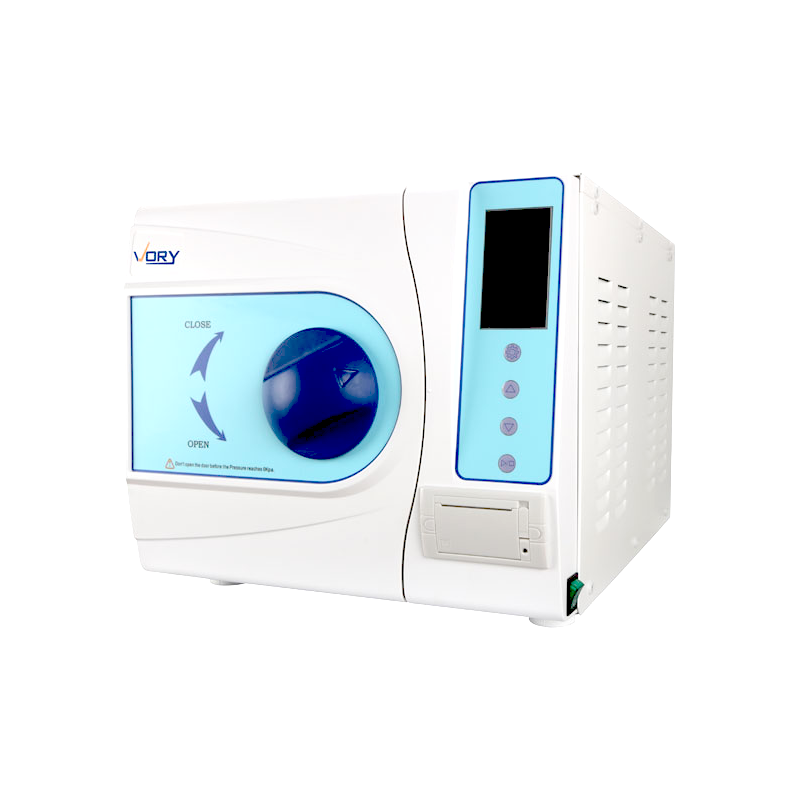
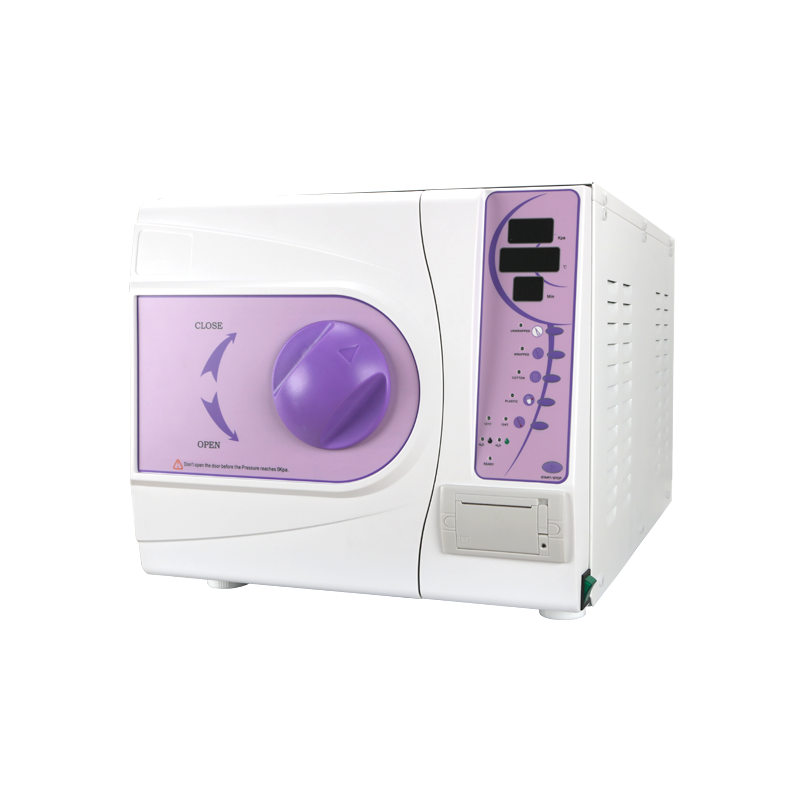
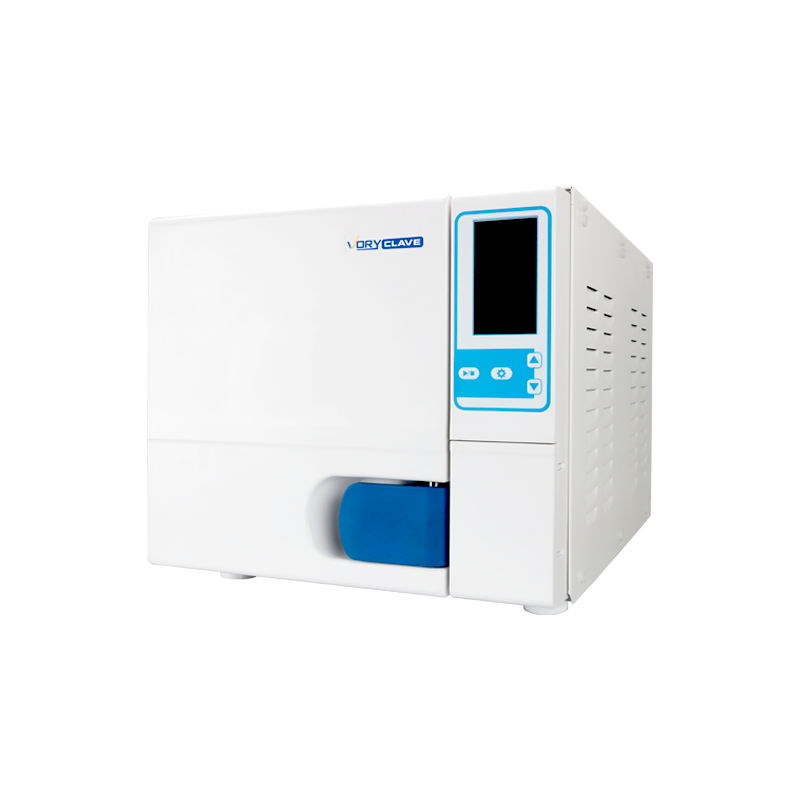
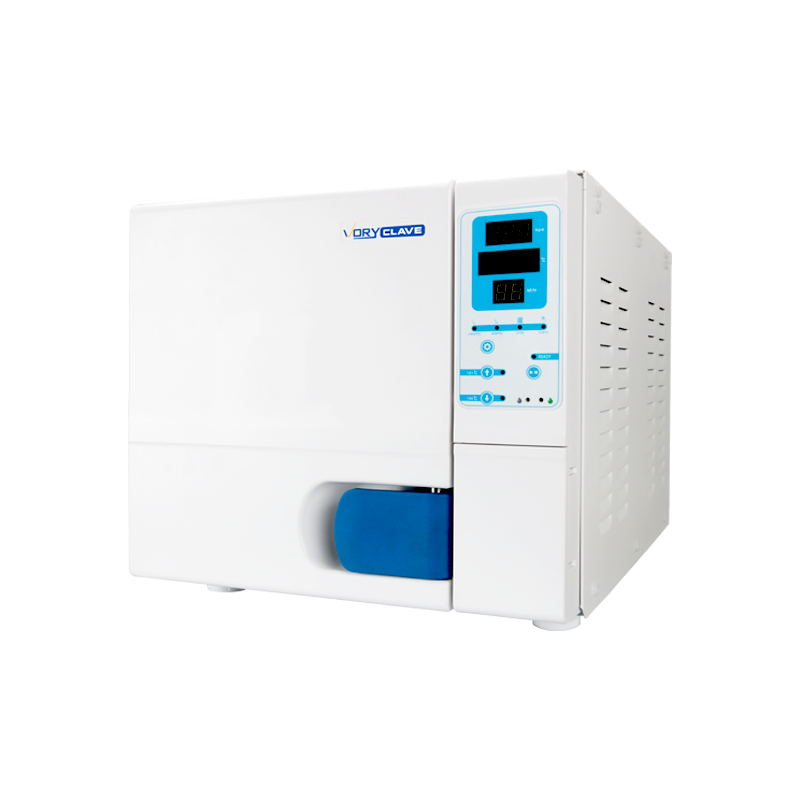
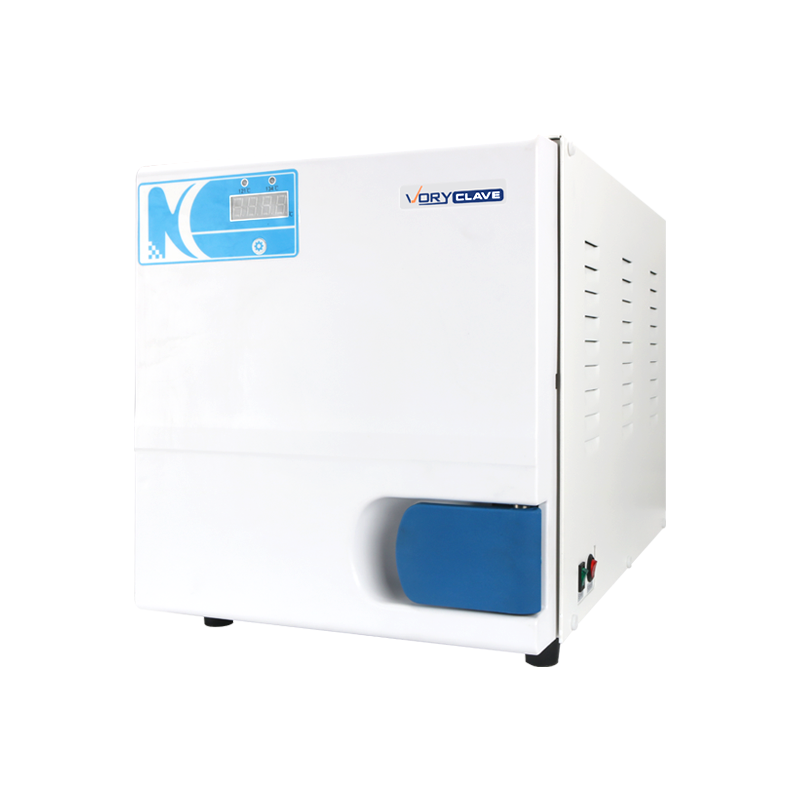
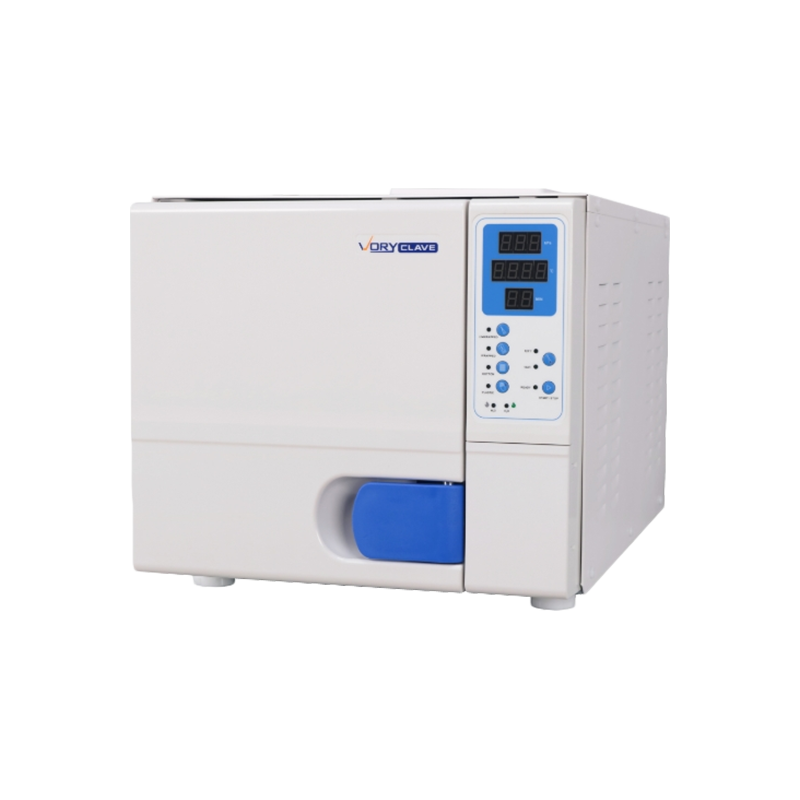
Ningbo Wanrui Medical Instrument Co., Ltd. builds its tabletop sterilizer line around this straightforward operating principle. The VORYBA tabletop autoclave and the VORYBB-16 tabletop autoclave both use a gravity steam cycle that produces a predictable, repeatable pressurization profile, which makes daily validation simpler for clinic staff. The VORYNF Class N autoclave follows the same operating principle in a different chamber configuration, giving buyers another compact option when Class N simplicity is the priority.
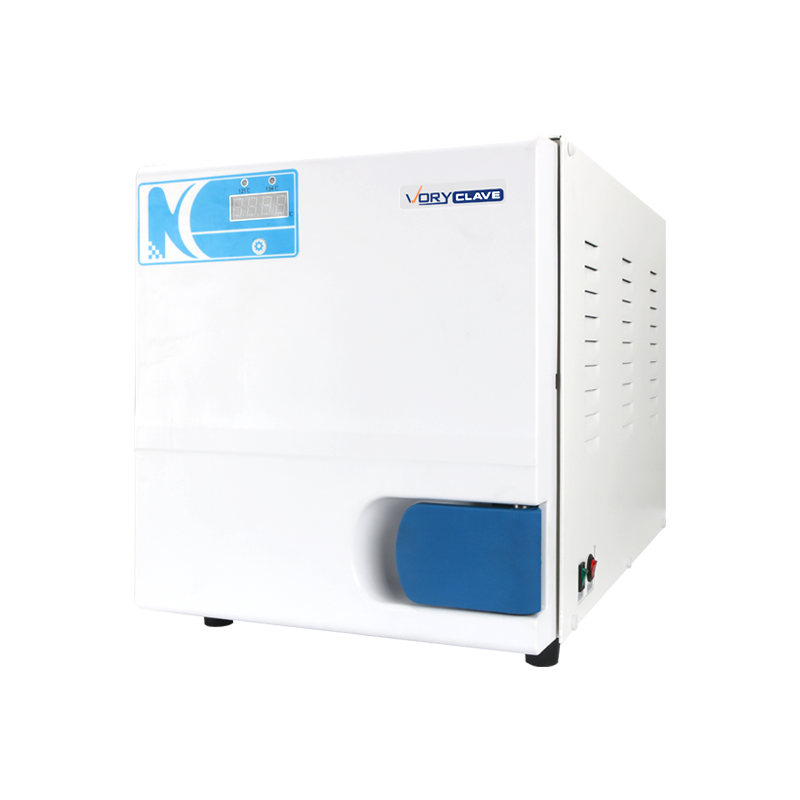 Custom Fully automatic Autoclave class n model:vory-n-f Suppliers, OEM/ODM FactoNingbo Wanrui Medical Instrument Co., Ltd is China Custom Fully automatic Autoclave class n model:vory-n-f suppliers and OEM/ODM factory,...View Product →
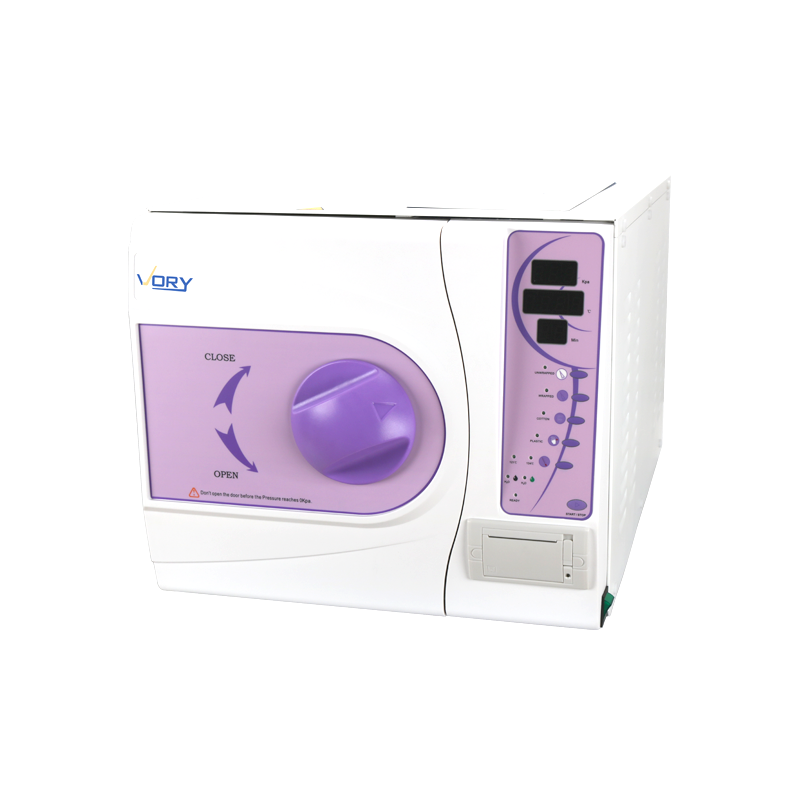 Custom LED display model:vory-b-b Vacuum Autoclave Class B Suppliers, OEM/ODM FaNingbo Wanrui Medical Instrument Co., Ltd is China Custom LED display model:vory-b-b Vacuum Autoclave Class B suppliers and OEM/ODM facto...View Product →
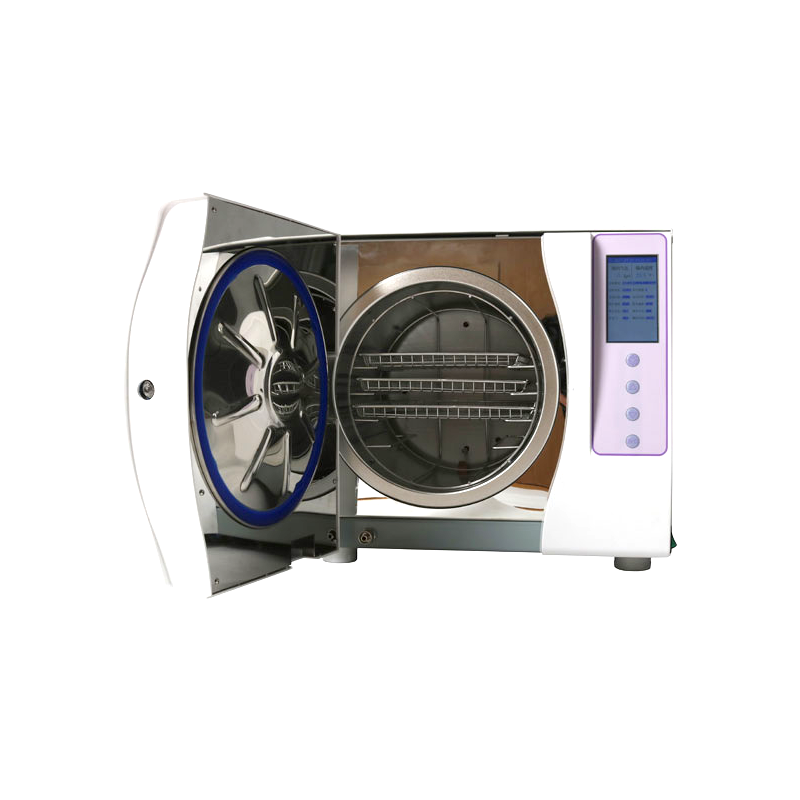 Custom LCD display model:vory-b-a Class B Autoclave Steam Sterilizer Suppliers, Ningbo Wanrui Medical Instrument Co., Ltd is China Custom LCD display model:vory-b-a Class B Autoclave Steam Sterilizer suppliers and OEM...View Product →
If you are comparing Class N with more advanced cycle types, the Class B, Class N, and Class S sterilizer differences are explained in practical terms in the industry knowledge base.
A brochure will not tell you how well an autoclave pressurizes under real load conditions. The most reliable way to evaluate a candidate machine is to check its measured behavior rather than its rated specifications. Use the four steps below.
For tabletop medical sterilizers, a healthy pressurization rate is roughly 0.1 to 0.3 bar/min (about 1.5 to 4.4 psi per minute) in a gravity displacement cycle, and up to 0.5 bar/min in pre-vacuum designs. Industrial curing and vulcanization autoclaves commonly run at 0.2 to 0.5 bar/min toward targets of 50 to 200 psi.
The most common causes are a blocked drain trap or air vent, a worn door gasket, scale on the heating element, or a load that is packed too tightly. Always run an empty cycle first to isolate the cause. If the empty cycle pressurizes normally, the problem is load-related; if not, inspect the gasket, the trap, and the water quality in that order.
No. Sterilization quality depends on saturated steam reaching the correct temperature and being held there for the required time at the correct pressure. A fast ramp shortens the cycle, but if air remains in the chamber or the steam is not saturated, the cycle may still fail even with an aggressive pressurization profile.
A 134°C saturated steam cycle typically operates at approximately 30 psi (2.0 to 2.1 bar) gauge pressure. The exact value changes slightly with altitude and barometric pressure, which is why autoclaves have pressure regulators and electronic temperature control rather than relying on a fixed pressure reading.
A small pressure drop during the holding phase is normal as steam condensation and chamber heat loss balance each other. The controller typically admits small pulses of steam to maintain the setpoint. If the pressure drops continuously or loses more than 2 to 3 psi, suspect a leaking door seal or a faulty pressure sensor.
Use a calibrated digital pressure gauge connected to the chamber service port and time the period from cycle start to setpoint with a stopwatch or the cycle printout. Repeat the measurement three times with the same load type to get an average. The result should be within the typical ramp range for your autoclave category in the comparison table above.
Replacing the steam inlet solenoid with a higher-flow valve will not meaningfully increase the pressurization rate if the steam generator cannot produce steam faster. The generator output is the real bottleneck in most tabletop autoclaves. Increasing the inlet flow without increasing generator capacity only causes pressure fluctuation and overshoot, which is worse for sterilization consistency.
If you have any question for the installation
or need support, please feel free to contact us.
86-15728040705
86-18957491906


