Content
An autoclave is a sterilizer — but not every sterilizer is an autoclave. The word "sterilizer" describes the goal (destroying all microbial life), while "autoclave" describes the method: pressurized saturated steam at temperatures typically between 121 °C and 134 °C. In dental offices, hospitals, and laboratories, a dental autoclave is the gold standard because steam under pressure penetrates instrument packaging and kills bacteria, spores, viruses, and fungi far more reliably than dry heat, chemical vapor, or UV light alone.
If someone tells you "we sterilize our instruments," that statement is meaningless without knowing the method. A UV cabinet disinfects; it does not sterilize. Boiling water kills most pathogens but not heat-resistant endospores. A validated dental autoclave that reaches 134 °C at 2 bar for a minimum of 3 minutes achieves a Sterility Assurance Level (SAL) of 10⁻⁶ — meaning fewer than one instrument in a million has any chance of remaining contaminated. No other common clinical method matches that number.
The operating principle of a dental autoclave is elegant in its simplicity. Water is heated inside a sealed chamber until it converts to steam. Because the chamber is sealed, pressure builds. Under pressure, steam can reach temperatures far above 100 °C — the normal boiling point at sea level. That superheated saturated steam carries enormous thermal energy and penetrates packaging, wrapping, and instrument crevices that dry heat cannot reliably reach.
The critical biological event happens when steam condenses on a cooler instrument surface. Condensation releases latent heat — approximately 2,260 kJ per kilogram of water — directly into the instrument. This rapid, intense energy transfer denatures proteins in microbial cells, ruptures cell membranes, and inactivates nucleic acids. The result is the destruction of all viable microorganisms, including the notoriously resistant Geobacillus stearothermophilus spores used as the biological indicator standard for steam sterilization validation.
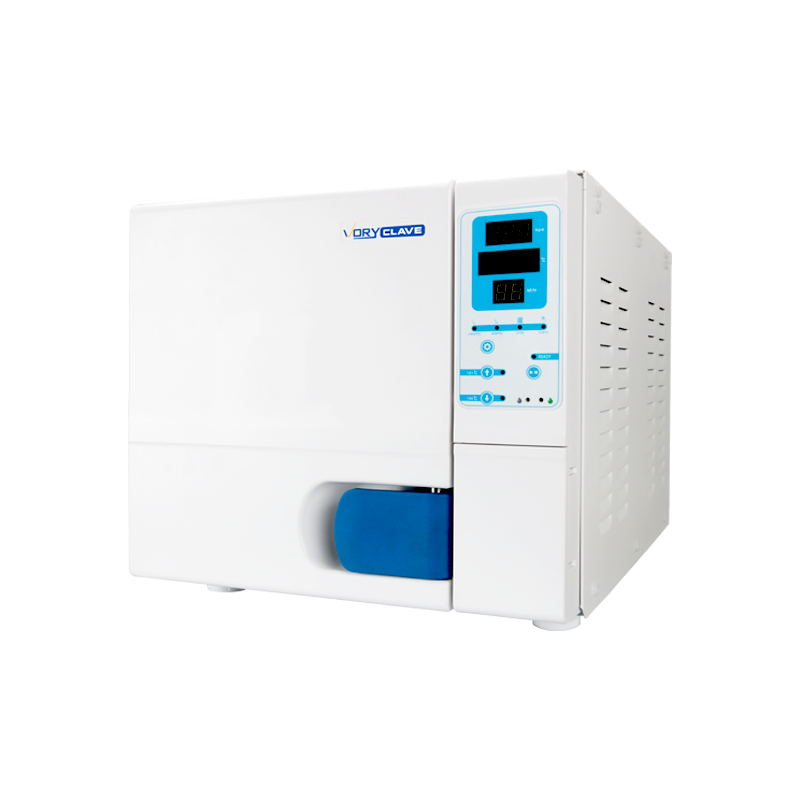
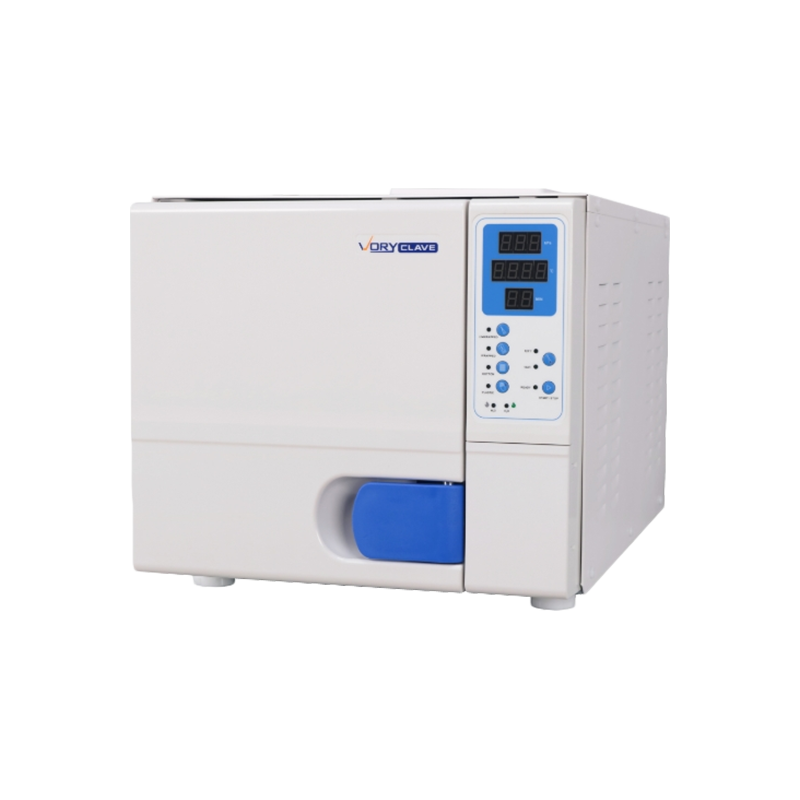
Class B dental autoclaves — the type required by European standard EN 13060 for processing wrapped and hollow instruments — add pre-vacuum and post-vacuum stages to maximize steam penetration and drying effectiveness. Class N autoclaves (simpler, no vacuum) are only appropriate for solid, unwrapped instruments used immediately after sterilization.
Understanding where autoclaves fit among other sterilization technologies requires looking at the complete picture — temperatures, cycle times, instrument compatibility, and limitations.
| Method | Temperature | Cycle Time | Kills Spores? | Safe for Packaged Items? | Instrument Damage Risk |
|---|---|---|---|---|---|
| Steam Autoclave (134 °C) | 134 °C | 3–6 min | Yes | Yes | Low (avoid carbon steel) |
| Steam Autoclave (121 °C) | 121 °C | 15–30 min | Yes | Yes | Low |
| Dry Heat Sterilizer | 160–180 °C | 60–120 min | Yes | Yes (special foil/glass) | High (plastics, rubber) |
| Chemical Vapor (Chemiclave) | 132 °C | 20–30 min | Yes | Yes (special pouches) | Low (no rust) |
| EtO Gas Sterilizer | 37–63 °C | 10–16 hours | Yes | Yes | Very Low |
| UV "Sterilizer" Cabinet | Room temp | 15–60 min | No | No | Very Low |
| Boiling Water | 100 °C | 10–30 min | No | No | Moderate |
The data makes a clear case: for typical dental instruments — handpieces, burs, scalers, mirrors, extraction forceps — a dental autoclave offers the fastest, most reliable path to true sterilization while preserving instrument longevity. Dry heat and chemical vapor are viable alternatives for specific instrument types but carry meaningful trade-offs in time and material compatibility.
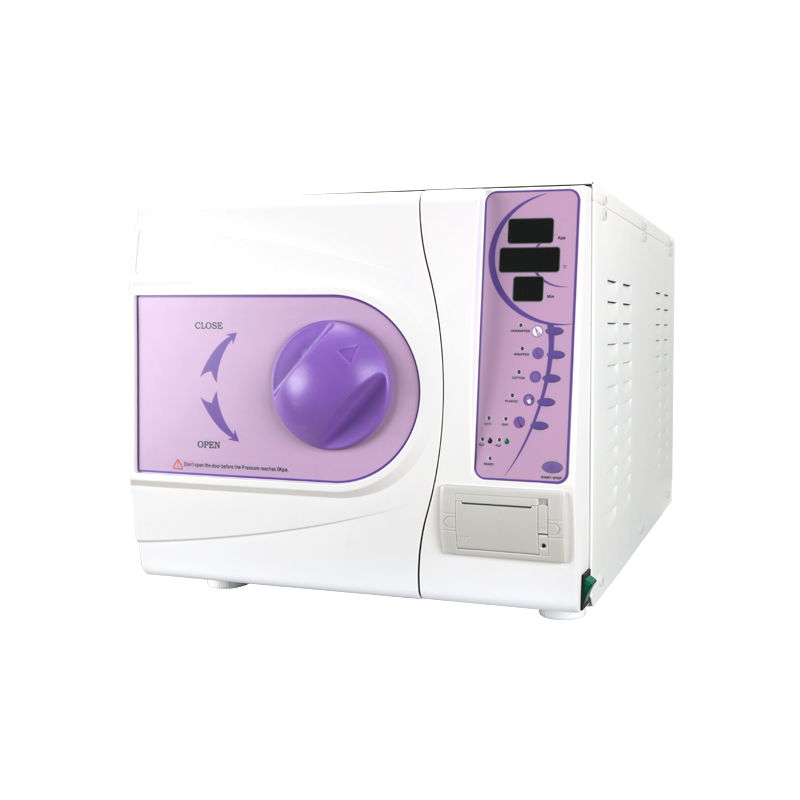
Not all dental autoclaves are built the same. European standard EN 13060 — the benchmark referenced globally — defines three classes based on what the autoclave can safely and effectively sterilize.
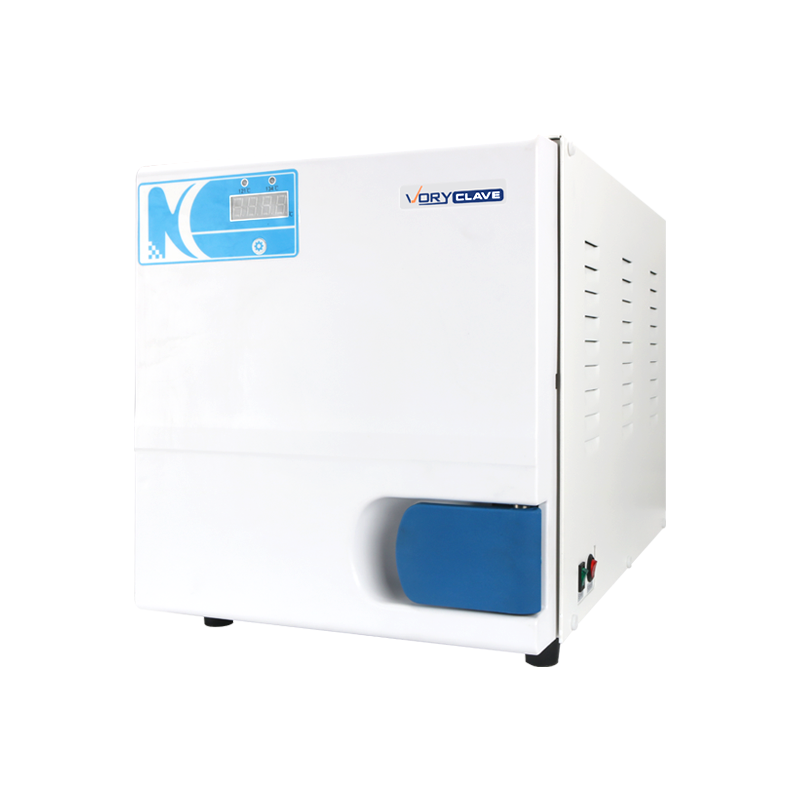
N = Naked / Non-wrapped solid instruments only. These entry-level autoclaves have no vacuum system. Steam displaces air by gravity only, making penetration into hollow instruments or wrapped packs unreliable. Suitable for solid, unwrapped instruments used immediately after sterilization — but that use case is increasingly rare in modern dentistry.
Typical chamber size: 6–12 liters. Cycle time at 134 °C: approximately 4–6 minutes sterilization plus drying.
S = Specified by the manufacturer. Class S autoclaves fill the gap between N and B. They can handle specific load types — often including wrapped instruments or certain hollow items — as stated in the manufacturer's specifications. The burden is on the operator to confirm the unit's validated performance matches the actual instruments being processed.
Common in smaller dental practices with moderate load variety.
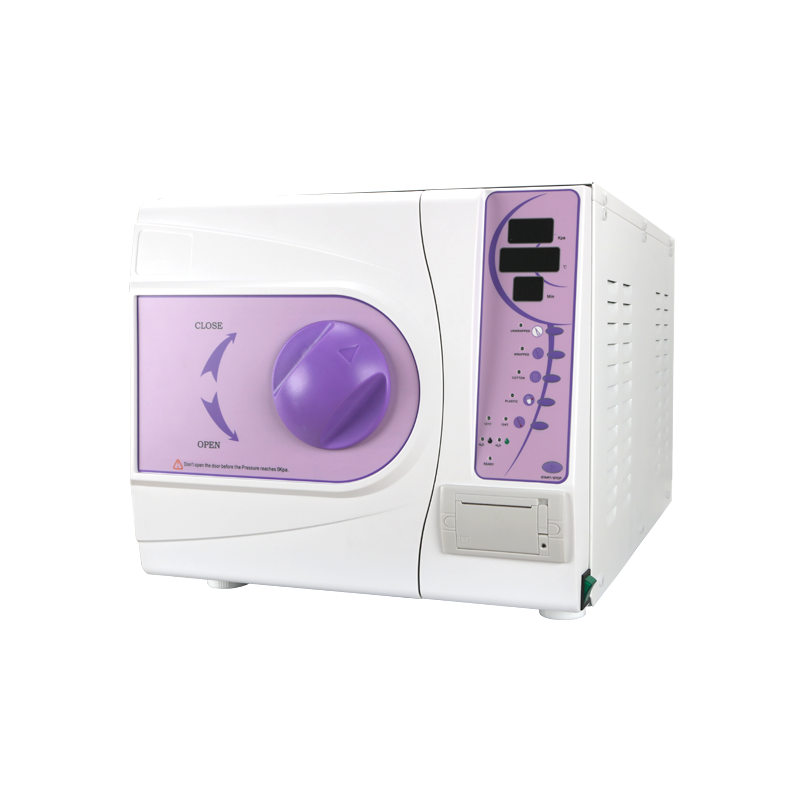
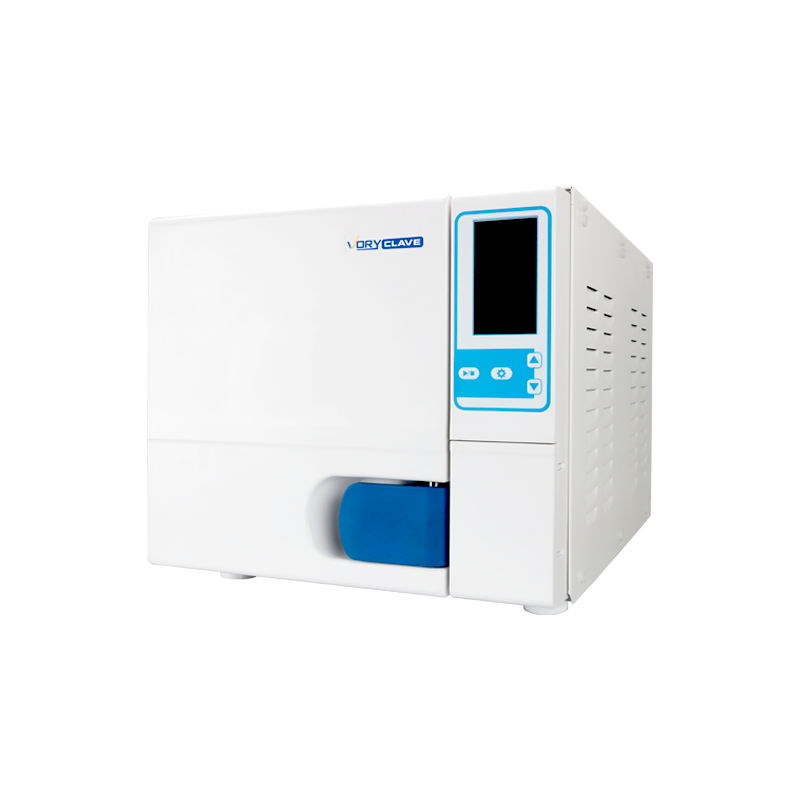
B = Big hospital standard — the most capable class. Class B dental autoclaves incorporate a fractional pre-vacuum or pulsed vacuum system that actively removes air before steam entry. This guarantees steam penetration into hollow instruments (turbines, handpieces, endo files in packaging), multi-layered textile packs, and pouched rigid instruments.
Required for wrapped loads in many countries. Typical chamber size: 8–23 liters. Runs up to 3 pre-vacuum pulses before the sterilization phase.
For most modern dental practices, a Class B dental autoclave is the appropriate choice. The ability to sterilize packaged instruments — which can then be stored for weeks or months without losing sterility — transforms workflow efficiency and patient safety.
Despite the autoclave's dominance, several instrument categories genuinely benefit from alternative sterilization methods. Knowing when to deviate from the autoclave is as important as knowing why it works.
Dry heat sterilizers — also called hot-air ovens — circulate hot air at 160 °C for 60 minutes or 180 °C for 30 minutes to achieve sterilization. They are the preferred method for:
The major limitation is cycle time. A full 160 °C / 60-minute cycle often takes 90–120 minutes including heat-up and cool-down, making dry heat impractical for high-volume practices. Plastics, rubber, and most modern dental handpieces cannot survive these temperatures.
Chemical vapor sterilizers use a mixture of alcohol and formaldehyde under pressure at approximately 132 °C. They gained popularity in dentistry because instruments emerge dry and without the surface rust sometimes associated with repeated steam cycling. Carbon steel burs, orthodontic instruments with delicate springs, and certain pliers tolerate chemical vapor better than steam.
However, the use of formaldehyde-based proprietary solutions raises ventilation and chemical handling considerations that many practices prefer to avoid. The specialized chemical solutions add recurring cost, and the method is less versatile than a Class B dental autoclave for hollow or complex instruments.
EtO sterilization works at low temperatures (37–63 °C), making it the only method that can safely sterilize heat-sensitive electronics, complex optics, and flexible endoscopes. In dental settings, it is rarely used at the practice level due to extremely long cycle times (10–16 hours including aeration) and the requirement for specialized ventilated equipment. EtO is primarily encountered in centralized hospital sterilization departments or manufacturer sterilization of single-use devices.
UV sterilizer cabinets are not sterilizers in the clinical sense. Ultraviolet light (typically UV-C at 254 nm) can reduce surface microbial counts by 99.9% on directly exposed surfaces, but it cannot penetrate packaging, instrument joints, crevices, or even fingerprint oils. UV cabinets are appropriate for storing already-sterilized instruments or for surface disinfection of items that cannot tolerate heat. Mislabeling them as "sterilizers" is a persistent source of confusion in dental supply marketing.
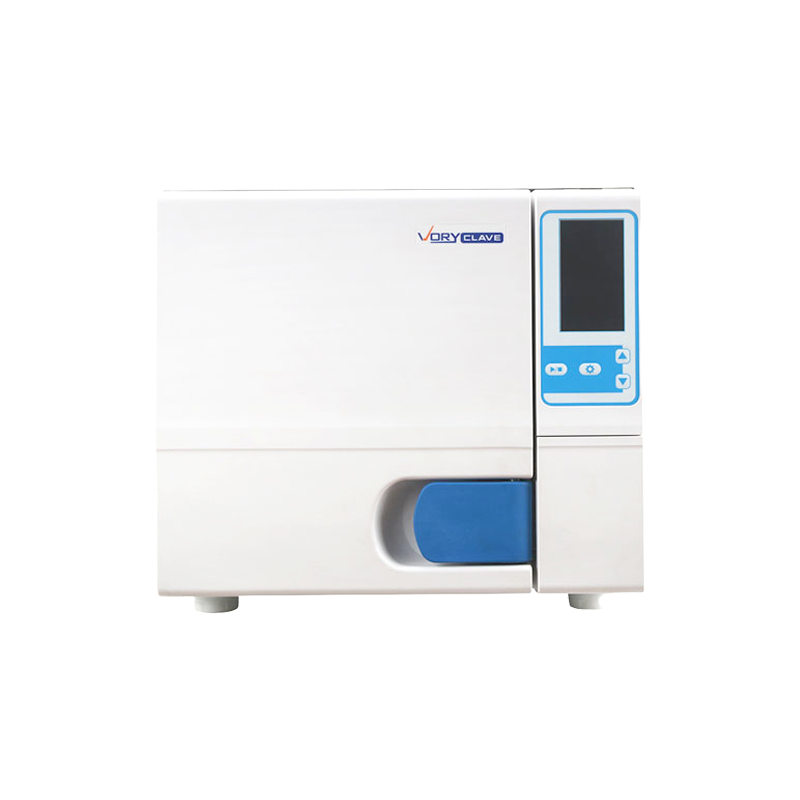
Purchasing a dental autoclave is a significant long-term investment. A unit purchased today will likely process instruments for 10–15 years if properly maintained. The following factors determine which dental autoclave fits a specific practice.
Chamber size ranges from 6 liters (single-operatory startup practices) to 23 liters or more (multi-chair group practices). A common planning rule: calculate the number of instrument setups needed per peak hour, multiply by the average weight per setup (typically 200–400 g), and choose a chamber that handles 2–3 peak-hour loads per cycle. Undersizing the autoclave creates processing bottlenecks; oversizing wastes energy and water.
As discussed above, Class B is the practical standard for most dental practices. If the practice processes handpieces (all modern turbines and contra-angles should be sterilized after each patient), Class B is non-negotiable. Class N is acceptable only for limited solid-instrument loads in practices with constrained budgets and low complexity.
Fast cycles matter in busy practices. Modern Class B dental autoclaves offer rapid cycles completing full sterilization and drying in under 30 minutes for standard pouched loads. Some units offer a dedicated handpiece cycle (typically 134 °C / 3.5 min sterilization) that finishes in 18–22 minutes total. Multiple program options (prion cycle, textile cycle, liquid cycle) add versatility.
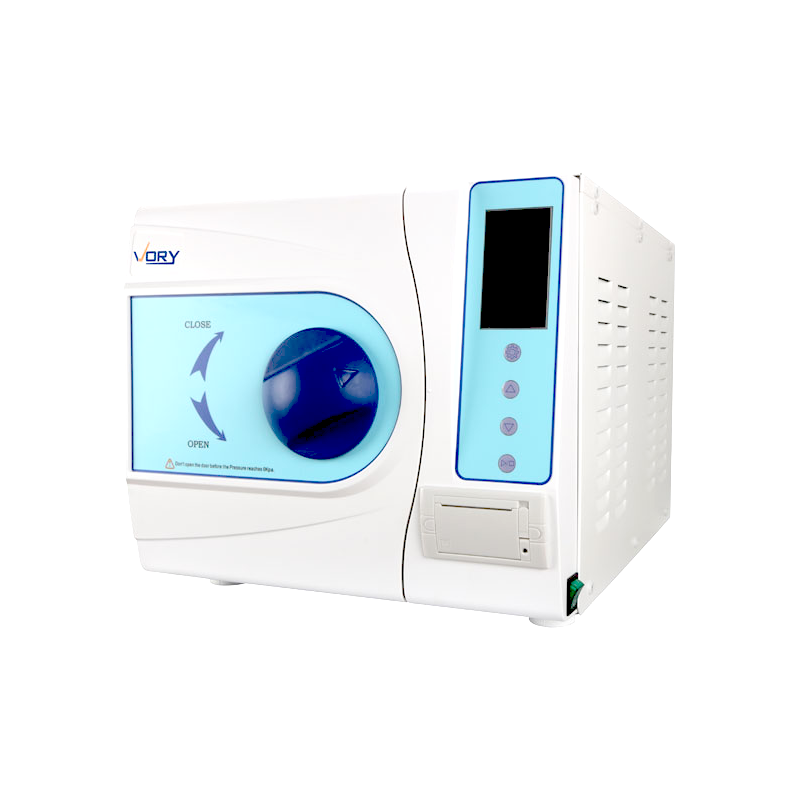
Modern dental autoclaves include built-in data loggers that record temperature, pressure, and time for every cycle. Some units offer USB export, SD card storage, or direct network printing of cycle records. Automated cycle logging reduces documentation burden and provides a defensible record for infection control audits. Look for units that print or export in formats compatible with practice management systems.
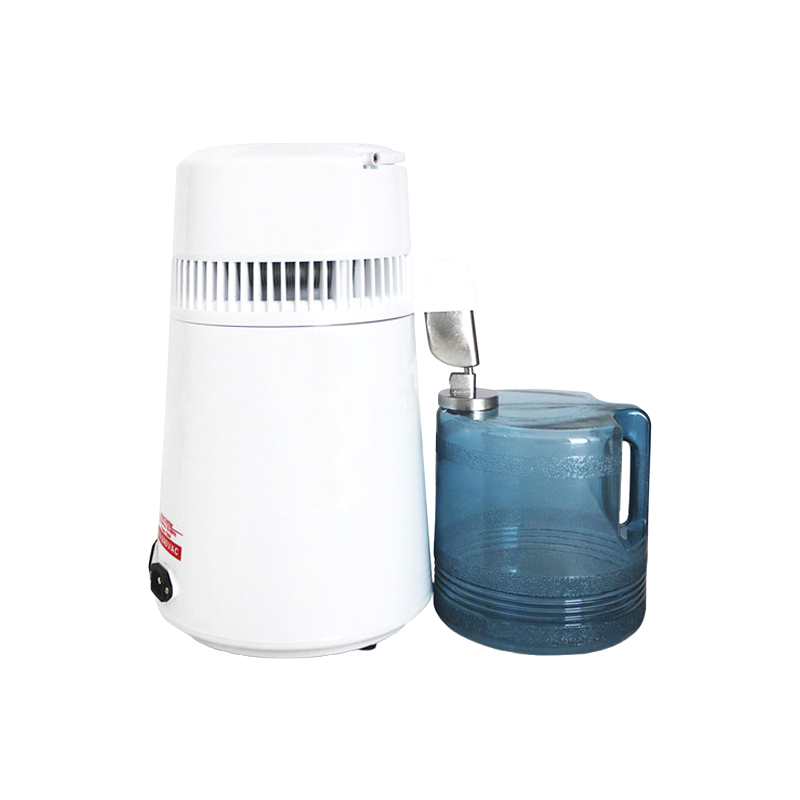
Autoclaves require distilled or demineralized water. Hard tap water causes mineral scale buildup on chamber walls and heating elements, reducing efficiency and shortening service life. Most manufacturers specify water conductivity below 15 µS/cm. Built-in water reservoirs (typically 2–5 liters) simplify operation; some models connect directly to a demineralized water supply line.
Even the best dental autoclave requires periodic maintenance: door seal inspection and replacement (typically every 6–12 months depending on cycle volume), chamber descaling (every 200–400 cycles or as water quality dictates), filter replacement, and annual calibration. Choose brands with a strong local or national service network, because a dental autoclave out of service during a busy clinic week creates serious workflow disruption.
Owning a dental autoclave is only the first step. Consistent performance validation is the bridge between equipment capability and actual patient safety. Three levels of testing are used in dental practice.
Chemical indicator strips or integrated indicators on sterilization pouches change color when exposed to steam at the required temperature. Class 1 indicators (process indicators) confirm the item has been through a cycle. Class 5 or 6 integrating indicators provide more information by responding to time, temperature, and steam — but no chemical indicator confirms sterility. They confirm exposure conditions only.
Biological indicators contain spores of Geobacillus stearothermophilus — the most resistant organism used as the steam sterilization challenge organism. After a cycle, the BI vial is incubated at 56 °C for 24–48 hours. No growth confirms the cycle achieved the conditions necessary to kill even the most resistant spores. Most practices run BIs at least weekly, and many infection control guidelines recommend daily BI testing.
The Bowie-Dick test is specific to pre-vacuum (Class B) autoclaves. A standardized test pack is placed in the coldest part of an empty chamber, and the unit runs a specific test cycle. Uniform color change on the test sheet indicates that the vacuum system is removing air effectively and steam is penetrating the entire test pack evenly. The Bowie-Dick test should be run every morning before the first patient load on any Class B dental autoclave.
Physical monitoring — reading and recording the temperature and pressure display or printout after every cycle — is the baseline daily practice. The combination of physical monitoring (every cycle), chemical indicators (every pouch/load), and biological indicators (weekly minimum) creates a layered verification system that provides confidence in sterilization performance over time.
Even a well-specified, properly installed dental autoclave can fail to sterilize if operational errors occur at any point in the process. The following are the most frequently documented failure points, drawn from infection control audits and sterilization quality reviews in dental settings.
In everyday clinical conversation, "autoclave" and "sterilizer" are used as synonyms — and for most dental practices, this creates no practical problem, because the dental autoclave is the only true sterilization method in use. But the distinction matters in specific situations.
When evaluating new equipment, the word "sterilizer" on marketing materials without further specification should prompt investigation. What method? What temperature? What validated cycle parameters? A UV "sterilizer" is a disinfection device. An ozone "sterilizer" may achieve high-level disinfection on some surfaces but is not validated for packaged instruments. The use of "sterilizer" as a generic commercial term has created genuine confusion in dental supply procurement.
From a regulatory standpoint in the United States, the FDA classifies steam sterilizers (autoclaves) used in healthcare as Class II medical devices under 21 CFR Part 880. Devices marketed as "sterilizers" must demonstrate 510(k) clearance or premarket approval for their specific intended use and claimed method. The regulatory category a device falls into is tied to its actual mechanism, not its marketing name.
In infection control documentation and audit contexts, the precise term matters. An infection control policy that states "instruments are sterilized in the sterilizer" is less defensible than one that states "instruments are steam-sterilized in a Class B dental autoclave with a 134 °C / 3.5-minute cycle, validated by weekly biological indicator testing." Specificity in sterilization documentation is itself an element of good infection control practice.
Dental handpieces — air turbines, electric motors, contra-angles, and low-speed attachments — deserve special attention because they combine complexity (internal channels, bearings, O-rings, fiber optics) with high cross-contamination risk. Blood, saliva, and aerosols enter turbine headpieces during use, and turbine suck-back (the brief aspiration of fluids when the handpiece is turned off) can contaminate internal water channels up to 20 mm from the chuck, according to research published in the British Dental Journal.
This means surface disinfection — wiping the exterior of a handpiece — is categorically insufficient. Only a validated sterilization method that reaches the internal components can address the contamination risk. Dry heat at 160–180 °C will damage modern turbine bearings and melt plastic components in most handpiece designs. Chemical immersion can damage internal lubricants and optical systems. EtO gas is viable but impractical at the practice level.
The dental autoclave is the only practical, validated sterilization method for modern dental handpieces. Specifically:
A Class B dental autoclave with dedicated handpiece racks and a validated handpiece cycle is the standard recommendation from both handpiece manufacturers and infection control specialists. Using a Class N autoclave for handpieces — even with the handpiece removed from packaging — is insufficient because of incomplete air removal and unreliable steam penetration into internal channels.
If you have any question for the installation
or need support, please feel free to contact us.
86-15728040705
86-18957491906

 English
 عربى
عربى

